Rescuing Jack: The pup who redefined carelessness.

Carefree; the state of being free from anxiety or responsibility, one of my favorite words. As I grow older its meaning seems to become less and less relevant to my life, but I am eternally craving the feeling. I have always associated it with being calm and optimistic, never careless, never oblivious. Last Thursday, however, I learned that even being carefree comes with a price.

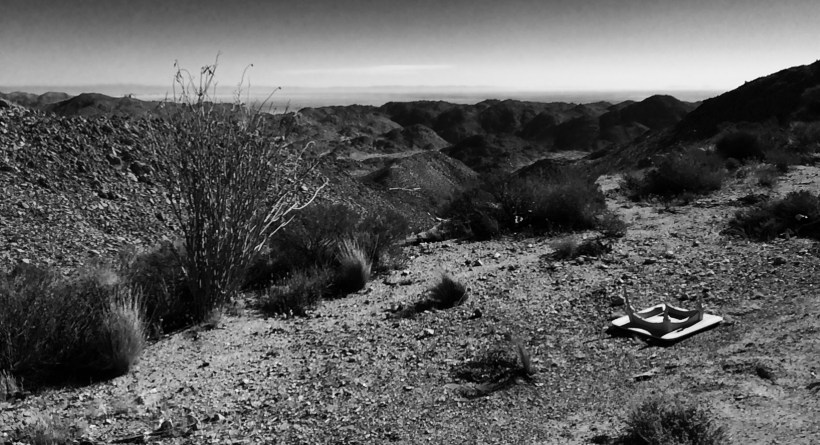
As usual, the morning was cool and refreshing. An electric midnight storm had left a puddle of water around my tent, but under my covers I had stayed warm and dry. I love night’s like that; when I don’t have anything to worry about, at least nothing besides my own comfort. I have learned time and time again just how fleeting they can be, and yet I always seem to take them for granted. This one, however, I savored; all I had on my agenda for the day was a mild, secluded bike ride. As soon as the sun rose to burn all of the moisture away, the atmosphere became immediately hot, as it does every day in the desert. It was around 10am when I met the animal that would take away my peace of mind for many nights to come.

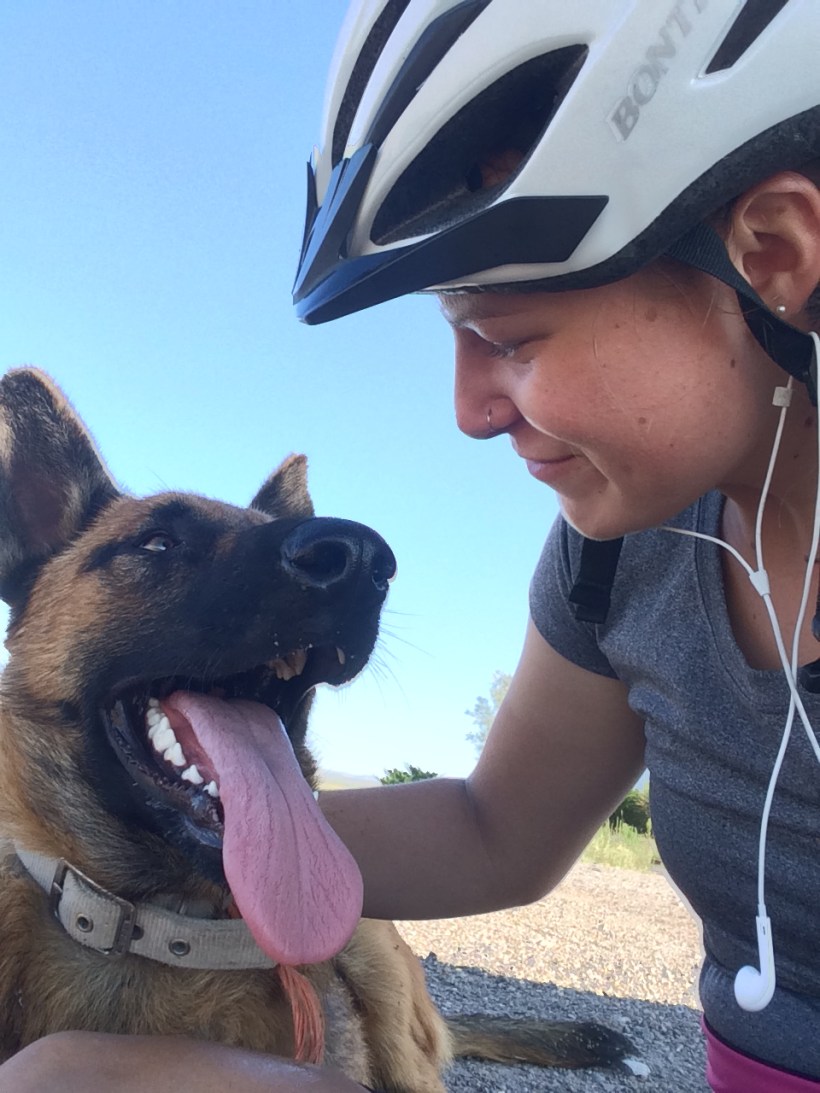
He was just another homeless dog; a swift silhouette on the horizon, prancing the abandoned roads in search of something to eat. Down here, trash is not hard to come by, and maybe that’s why he wasn’t emaciated. I got off of my bike, all too aware that if I flew by him I would be a perfect target to chase, and started speaking in a soothing voice, not wanting to inspire an attack. I know this fear is just extra weight that I carry with me for no reason at all, but I’ve always been especially cautious around these types of animals.

Most Southern Tier cycling websites suggest riders have pepper spray at the ready, because many of the dogs in the South are raised solely as watch dogs. I don’t do that because I can’t imagine ever bringing myself to actually use it, so maybe that’s why I am always on edge. Anyway, it goes without saying that this dog was different. He was shy, but he was irresistably sweet. This pup was so tired that when I so much as gave him the acknowledgement that he had gone without for so long, he immediately fell into a deep sleep beside me, exausted fom god knows what he was doing.

Dozens of flies swarmed the cuts on his face, as fire ants went about building a nest only a few feet from us. He didn’t stir. After drinking the rest of my water, I think he finally felt comfortable enough to rest. With his head on my knee, we waited under the shade of a billboard for hours while animal control drove out to us.

I feel like calling animal control was my biggest mistake. This sweet animal had done nothing but kiss me, and trust me, and wag his tail at me. Still, when the officers came to put him in their truck, they were not gentle. I can only imagine how scared he must have been in that dark metal box that they put him in, and for good reason. So many abandoned animals take their last rides in that truck, before they spend their final days in empty cages. That is exactly where this dog was headed, and I knew that. The next day, when I went to the shelter to “bail him out”, I saw for myself just how bleak this particular shelter was.

I spent the next 24 hours conflicted with the idea of trusting the animal shelter that he had been taken to, or taking matters into my own hands. Several calls to the shelter helped me make my mind up pretty fast, as they could not assure me that he wouldn’t be euthanized after his 48 hour grace period was up. Las Cruces, New Mexico is so overwhelmed with stray dogs that only the cream of the crop stand a chance of being adopted. The ones that can’t be taken in are unspoken of, and disposed of.

I’ve been to kill shelters before, and they are always terrifying. Rows and rows of man’s best freind, all organized by breed and temperment, barking and howling their unheard negotiations for freedom. Each snatched from a world that did not value them, only to be taken to an institution that does not have room for them. At least half of them are pure breeds, whose parents were not spayed and neutered and whose owners were not able to care for them. One might blame this problem on poverty, but I blame it on ignorance.

There are too many dogs in this world, and too many carefree people. Puppy mills, pet stores, and even your average neighborhood backyard-breeders all contribute to a system that leaves hundreds of thousands of dogs homeless, mistreated, and ultimately sentanced to death. Those who call themselves animal lovers should have no tolerence for the breeding industry whatsoever. If the suffering of companion animals is to end we can no longer respond to the ignorance of our friends with a smile and a nod, as I have done for far too long.

In the end, I did find the silver lining in this hellstorm of a situation. Jack, the name given to this sweet dog by his new owners, eventually found his American dream. It wasn’t easy, and the hardest part by far was finding a few kind hearted people who were willing to advocate for my cause. Those people were not the officers who responded to my call, nor the workers at the shelter who only gave me a several hour window to drive him out of state, but the handful of strangers who offered to give me a ride when I did not have a car. The woman who helped me keep Jack from being attacked by another pack of stray dogs, and my always proactive mother who has a way of making anything possible. The last to help me were the real heroes of this saga; Jenny, whose name always seems to come up in my blog posts because she is always willing to go out of her way to do something kind for someone else, and my aunts Jean and Carrie, who are finally giving Jack the secure, forever home that he deserves.

Jack’s story is one that I’ll never forget; it’s exciting, it’s true, it has a happy ending. It’s the story of a puppy who escaped unknown horrors and still managed to be sweet enough to make it into a loving home. His is also a story of privilage, and it’s the story of a really messed up animal welfare system. I can’t stop thinking about what a miracle it is that this one got a second chance, and how lucky he is that he was born a german shepherd, and not a pit bull. It brings me so much happiness to know that he is safe and taken care of, but even that knowledge is not enough to make me feel optimistic. The truth is, I am heartbroken. This experience has exposed the truth of the overwhelming amount of animal neglect that this country enables. I wish I could sugar coat this, I wish I could serve the reality of this problem to you under a blanket of encouragement and hope, but I can’t. I can only add this to the extensive list of reasons it feels like America has forgotten the South.

I still battle with the image of all the other animals I left behind; the ones who weren’t desirable, the ones who will never be adopted. The ones who will spend their final days on a bed of concrete, and whose lives are of so little significance that they will soon be forgotten. This is the kind of thing that haunts me, the kind of thing that leaves me feeling hopeless. We saved one; that matters. It matters, but it’s not nearly enough.

I’m a softie, it’s true, and I’m sure I love dogs a little bit more than most. The ones that I have had in my life have brought me out of some of my darkest places, and I will never pass up an opportunity to help bring them out of theirs. The puppy that I lost over a year ago still makes appearences in my dreams, her absense still puts a knot in my throat when I return home, and the memory of her final days will still pull at my heart strings until the end of time. I don’t think any of that is too weird or too extreme. I don’t want people to think that my reaction to finding this stray dog in the desert is too weird or extreme either; it shouldn’t be a big deal, it should be normal.

Adventures like this bike trip sometimes make me feel like I am barreling through space at lightning speed; I just keep going and going and I never want to stop. I’ve seen adventure affect many people the same way, and I don’t think it’s necessarily a good thing. Even after everything I have just said, I have yet to admit that it was actually hard for me to stop for this helpless dog. Knowing how many homeless dogs there were around me, I was ready to cast him off as “just another one.” I’m so glad I didn’t. I’m so glad I stepped on the brakes for what amounts to the blink of an eye in my life, because it had a profound effect on the rest of his. I’ve just breached Texas, and I can only imagine how many more stray animals I am bound to come across. I can only dream that the ones I stop for will be able to live the carefree life that Jack gets to.


Veritas- a cooler word for the truth.

I never thought I’d return to the Southern Tier as a route leader; I thought my days of soul searching and daydreaming under the desert sun were over. When I got offered the chance to return to Bike the US for MS and ride across the country a second time, I laughed out loud. It was like a writer’s miracle; I finally had the chance to go back to all those infamous desert roads and rediscover what I had dubbed as my glory days. In a moment the world felt small again; I had been so sure that 2014 was my once in a lifetime opportunity to prove myself that I actually believed I had absorbed everything from the experience that I could. It goes without saying that I was wrong. Since that time I have learned over and over again that I could never possibly be done growing and each experience I have had has dwarfed the previous one. Now, as I sit a day’s ride outside of Phoenix (the same place I was abandoned two years ago) I realize that I have been looking for enlightenment in all the wrong places. To be honest, I don’t feel like I want to get all introspective and philisophical this time around. In fact, ironically enough I feel like I’ve gotten all of the roving and pondering out of my system for the time being. I’m happy to announce that this blog is no longer devoted to dramatic narratives of self-discovery, thank the lord. This time around, I’m writing the truth.

 
I passed a 200 acre feed lot the other day and it was absolutely horrendous. I was right outside of Brawley, California, so I can officially confirm that happy cows do not come from CA. I’m used to feedlots; I live in the Midwest and take a lot of road trips; but this one was the worst. It included the usual herds of oversized cattle confined to pastures full of two-foot-thick sludge, but it was also no less than 110 degrees out. That is torture for any living animal, and I don’t have to go into how intelligent and social cows are because I covered that in my last post. This particular feed lot was also connected to a slaughter house, and the sounds of cattle bolts and distressed cows could be heard all the way from the road. Hundreds of solar panels stood amoung them and provided the small shelters that the poor animals huddled under, exhausted and afraid, unaware that giant manmade eco-freindly machines were providing their shade. Once again, the irony was unbearable, but not as unbearable as that hot Mojave sun. No one could deny that a sight like this is terrible, and that the treatment of those animals is plain wrong. And yet, time and time again, we somehow manage to. We all do, even if we are only doing so by simply refusing to acknowedge the problem.

 
Maybe in a case like that, humans are too far removed from the problem to take action. After all, I don’t even remember noticing this feed lot the first time I rode by, and that’s probably because I was too preoccupied with my own stresses for the day. I think that too often people like me hesitate to even accept that such things are wrong, maybe because they feel insecure about not being able to stop it or maybe because they feel insecure about contributing to the very industry. Either way, a group of hungry cyclists facing a 90+ mile day are not the ideal candidates for proactive passerby. Of all the pictures posted on social media that day none were of the obviously depressing feed lot, and I’m sure those disturbing images were not even called to mind at dinner time when we stopped at a burger joint. Of course I don’t blame any of them. I do, however, blame the dangerous way of thinking that forces us to justify something that is so obviously wrong just so we can go about our days without having to carry the extra weight of acknowledging it.

 
Unfortunately, on the Southern Tier bike route it is virtually impossible to turn away from all of the abused and neglected animals, and many of them are not nearly as far out of reach. The evening before we got to Brawley we were camping in another small country town called Live Oak Springs. I was on the phone with Jenny when I found I was being followed by two skinny, mangy calico kittens and the first thing I said to her was, “Oh shit, now I have to deal with these kittens.”

 
It isn’t easy to drop everything and devote yourself to taking an animal to a shelter or finding their rightful owner, at least most of the time. Being raised by my kind hearted mother I have always prioritized the health and safety of animals, I think it’s just something that runs in my blood. Even so, I still only take action when I’m not able to justify not taking action. Only when I am sure nobody else is going to do something, especially on a bike trip where I am tired and emotionally drained, do I go out of my way to try and do something. I’m not proud of this, but because I rarely am convinced that other people are going to step in to help a neglected animal I find myself taking that role more often than not. If I had a car I’d save twice as many animals, but with only a bike I am usually reduced to harassing as many local people as it takes to get the job done.

 
In this particular case all I had to do was knock on the doors of a few camper trailers before I found the owners, and then I returned the kittens and suggested they be taken to a vet. In other instances, I have called the local sherrif and closest humane societys, trying to convince someone else to go out of their way to save an animal. I am delighted when I come into contact with a fellow animal lover who is more than willing to help me, but more often than not I spend a lot of time trying to convince people to make a call, or take a drive, or even refer me to somebody else. Everyone is just so busy, that without prioritizing animal welfare I don’t know how local law enforcement can even make a dent in the reports of animal abuse that they must receive. Especially in states like New Mexico and Texas where animal protection laws are virtually nonexistent.

 
The sheer amount of stray animals in the United States alone is overwhelming. The least I can do, besides try my best to help the few individual animals that I come across, is be honest about what I see. It is really the least anyone can do, but even that seems to make a differnce. Americans need to stop relying on the code of politeness and start intervening when we hear our aquaintences joke about blatant cruelty, and especially when we see it in action. If we can stop desensitizing ourselves to animal cruelty, and speak our minds when we come across something that is wrong, maybe animal abuse will finally go out of fashion.

 
Veritas means truth in Latin, and while that is a pretty fancy term to describe the theme of this entry, it felt pretty fitting. One of my fellow cyclists has it tattooed on his arm, and he explained to me today that he got it when he decided to live more truthfully and authentically. I won’t try to recreate his words, but what he told me inspired me to look up the word and I discovered that it comes from the name of an elusive greek goddess who embodied humility and truth. I guess she is my inspiration for the next few weeks that I will spend in the deep South, and as I pass through each town I’m going to document the treatment of animals that I witness exactly as I see it. In my quest to live a kinder and less destructive life I have fallen in and out of denial many times; once before I stopped eating meat, again before I spent time living on a dairy farm, and most recently when I witnessed the giant feedlot in Brawley that never made it onto a postcard. I can’t promise that my clumsy ranting won’t cause me to step on any toes, but don’t let that keep you from staying tuned for my next story! There is a fire lit beneathe me and I have never been more ready to speak the truth.


This is Calico, a highly creative name I gave to the healtier of the two cats. She was a stunner. For a less adorabe picture google Brawley feedlot.


image


Redefining Paradise: An Intimate Look at the Life of a Dairy Cow

Whenever I shop at Whole Foods or Trader Joe’s, I see cartons of milk that depict happy cows roaming in vast, green pastures. Up until recently, the stamp of approval from the FDA reading “certified organic” had always been enough to convince me that I shouldn’t feel guilty about the industry that I was supporting.  After getting the chance to spend time with the animals who provide the literal “cream of the crop” to health conscience, white collar consumers, I began to redefine what the best case scenario truly means. I went on a quest to find out where all of these happy cows lived, but after a few months of searching I was only able to find a select few.

Not unlike many of the decisions I have made in my life, deciding to take another break from school to work on a raw dairy farm was an impulsive choice. With an intense love for animals and very little understanding of my impact on their lives, I decided it was time to immerse myself in a business that I relied on every day. While I haven’t eaten meat of any kind for almost 5 years, I still consume milk and eggs. The same brutal videos of factory farms and slaughter houses that drove me to become a vegetarian also drove me to seek the truth about the dairy industry, particularly the side that sells non-GMO and grass fed products.

My first week on a small acreage farm in Berthoud, Colorado, was a dream. I got a glimpse into the lives of animals who were obviously cherished and appreciated, and whose comfort and health was valued above their milk production. Each cow was affectionately named and had their own distinct personality, and I couldn’t help but fall in love with their simple, shameless innocence. They weren’t afraid of humans in the least, and quickly warmed up to me and accepted me into their herd. Each day we became more and more comfortable with each other, to the point that they would approach me for affection and attention on their own. It soon became evident that these animals were less like the other livestock on the farm – consisting of almost 100 free range ducks and chickens – and more like companion animals. These cows were more dynamic and intelligent than I had ever imagined, and those qualities paired with the fact that they were innately gentle and docile made them some of the most peaceful animals I had ever encountered.

However, as soon as I became aware that their quality of life was much better than the vast majority of livestock in America, I also became aware that even cows that are treated with respect and kindness are still far from living in paradise. The reality is that it is incredibly expensive to treat animals humanely, and unfortunately we live in a world where the value of innocence is much lower than the demand for affordable animal products.

Though local anesthetic is used for all of the procedures that are absolutely necessary for the cows on this particular farm, such as dehorning, I will say that the process is still very difficult to witness. The owners of the raw dairy would spend thousands of dollars to treat any injuries or illnesses that their cows acquire, but there is no denying that bovine medicine seems like something out of the civil war era. It isn’t pretty, and I think most farmers would agree that it isn’t ideal. One of the most common and most troubling practices on the farm is the separation of mother and calf. This usually happens after the babies are completely weaned off of their mothers, but it is still heartbreaking to listen to them call to each other for days after they are separated. This practice has been the most difficult thing for me to justify to myself.

Yet in commercial dairy, the treatment is so much worse. The meticulous cleaning regimen we use twice a day to wash the cow’s udders with human grade iodine is simply not practical on large scale diaries. Instead, the udders are rubbed with a flammable grease and all of the dirty hairs are burned off of their skin without anesthetic. This is not the worst case scenario, either, but common practice. Dehorning is always done without anesthetic, too, and calves are taken away from their mothers immediately after birth, after which the male calfs are often raised as veal. These are details that I had never wanted to believe before, but after seeing how brutal even a small family owned farm can be, I have no trouble believing what goes on in mass-production lots.

In the end, a life that includes some of the unfortunate practices that I have seen on the farm is still much better than the alternative. I wish I knew how to fix all of the things that do not seem right to me, but I just don’t have the answers. If humans are going to continue to use animals for our own benefit, then our relationship with them can never truly be altruistic. Unfortunately, I can’t suggest that everybody I know become vegan and believe that anybody actually will. It is simply too much to ask, and not a very realistic way to reduce animal suffering, anyway.

Still, I believe it is helpful to be aware of our impact on animals. If we can’t support small, family owned farms every time we buy animal products, we can at least try to decrease the amount of money we invest in commercially produced animal products. Because I ate meat for most of my life without thinking twice about where it came from, I can sympathize with anybody who doesn’t even want to acknowledge the reality of factory farming. But if anything is ever going to change, we simply have to confront the moral implications of consuming large quantities of meat and dairy, especially. Animals are not commodities, they are living beings. It is time that we cherish all animal life, and not just when it is most convenient to us.