Blood Offering

In April I was blessed to visit a spiritual home of mine, the forest that was my sanctuary in childhood. I had the appropriated privilege of being stewarded by this land before it was released back into the illusion of private ownership.In the exchange a spell was broken for me, and my relationship toward this earth has been steadily deepening.

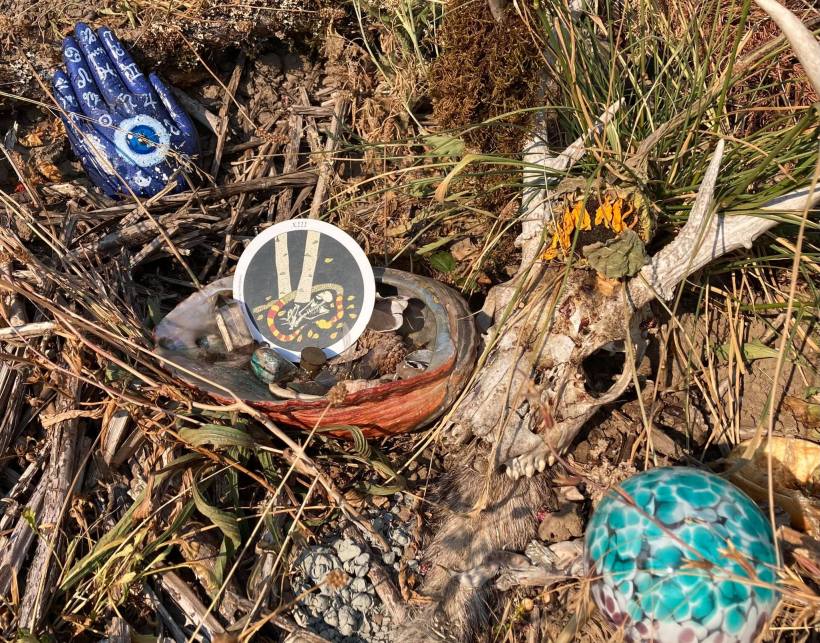
Last Spring, Jen and I returned out of devotion, and I was overjoyed to be menstruating and to be able to offer my blood in thanks.Cloven prints in the snow lead us to this alter, where Jen and I used to sit open-mouthed beneath rain drops falling from the cave wall.It’s where I had my first real spa treatment, with masks made of cold mud and the laughter of little girls. Masks that challenged the very idea that we were two and not one.

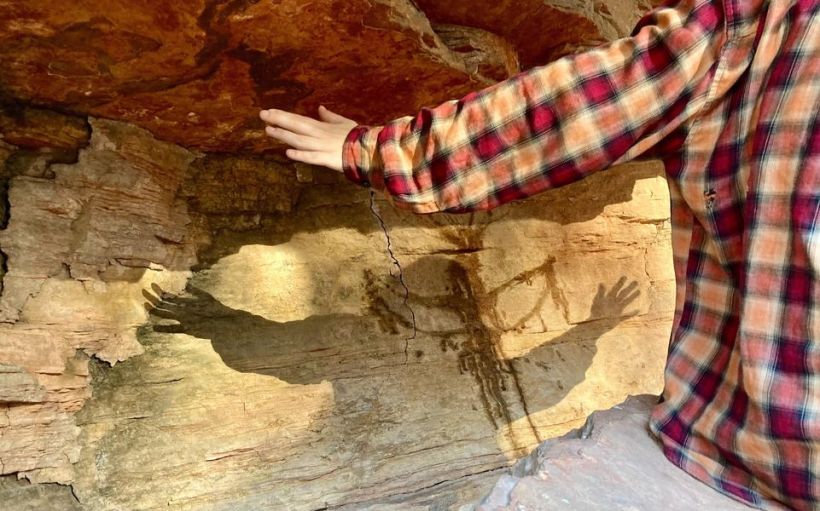
I might have offered my blood to the same soil if I hadn’t been summoned by an owl feather perched there. The ask was clearly for help revealing a work of art, which arose from the cliff face at the slightest sweep of feather and blood.I was so comforted by the image. It was profound to be witnessed by my familiars, including the other little girl who became my beloved.I reflected on the experience for months, until happily finding myself back in the arms of my sanctuary with Jen earlier this month.

I was curious if rain had washed away our guardian angel, but I laughed when I saw the painting still alive in broad daylight.Not faded in the slightest.It was the sun who mused with my willing form this time, and how profound was the poetry that revealed itself in this ongoing ritual of devotion to earth/self.Interactive art!Shadow or reflection, sprit has everything and nothing to do with me.Take away: don’t let my craving for meaning-making (death work) eclipse the nonsense that begs to co-create art with me (life’s work).

The Full Moon

September 22nd, Two Year Anniversary

It brought so much to fruition.Results of patterns waiting to erupt, Old reconciliations.

The coyotes had a rave.I worried about the dome blowing away.Thunder rang throughout the valley, an unusual delight.Our cannabis turned ripe overnight.

Rarer still, Jen and I are bleeding together on the equinox and our second anniversary.As soon as Jen told me she was bleeding I asked to have some, so I could mix it with mine. I’ve been collecting my blood in a honey jar with amber crystals still clinging. It smells divine.

But upon my request she hesitated, popping a hip like she does when she disagrees. Finally she told me she might share a cup with me, maybe.

I had expected her enthusiastic consent, what an entitlement! In her hesitation I was instantly humbled, and suddenly an elusive part of me was under the spotlight.

I suppose it is rather tasty to nibble on another’s power.

My eager maiden has reveled in moonblood magic for years; this soul has waited eons to play with it again. I’ve mixed it with others, have bathed in it, anointed favorite treasures and cast many impulsive spells. Such unabashed playfulness can be healing.It is new, however, to consider whether this intimate intertwining truly serves me and my relations.

Something about asking Jen to surrender her power to me, even a cupful, is a ritualistic intertwining that I don’t jive with. When it came time to douse our cauldron I didn’t want any of Jen’s blood at all. It was more profound to witness her holding it throughout our ritual, clasped tenderly in her favorite jar.

In hindsight I see I never wanted anything from Jen but to be witnessed by her. I wanted to invite her to share the smell of warm honeyblood with me as it boiled with the embers of our fire.How often that is the case.

Bubbles simmered in a codex of burnt hair and flower petals. The ashes of willowbark, rosemary, and juniper danced in the air. The soot of many relics collected over the past year, traces from old alters, dried herbs, two stellar feathers, all transformed into smoke. A clump of soft fur donated by Nugget the cat, pulled out with a bur, sizzled and sparked.

The shame encrusting figurative moonjars of my grandmothers begins to crumble with Jen’s boundaries. Nobody is entitled to anyone’s magic.Not only is Jen unashamed of her menstrual blood, but she dares to covet it. Well done.

One great honor in my marriage, and there are many, is to be witnessed in my unfolding without interference. Surrendering to my fate alongside another’s separate self-realization is not easy, but Jen teaches me to hear the voices that guide us toward a braver coexistence. Thank you.

Death During a Heat Wave

August 11, 2021

Who am I to say the birds don’t know the forecast, too?

Today a pair of finches are tending their nest in the oak tree. They feed their young as vigilantly as they’ve ever fed themselves, if not more so.

From a swaying nest four tiny heads pop out in tolls of hunger. The parents aren’t far away. The larger of them condescends the other from a high branch as the little one forages on the ground. Then he buzzes up to the nest with a bounty of bug vomit to share. The realest elixir of life.

I’m pretty sure they know how hot it’s going to get, but this is a different kind of knowing than I have. They aren’t suffering yet, and I doubt either parent lost any sleep.That’s not to say they don’t worry, but this is a different kind of worry than I have. We can all learn to dance with death, they tell me. With duty and gentleness and gratitude.

They tell me it’s high time to cultivate a practice of surrender, so fancy. Right now my practice looks kinda like a Shakespearean tragedy, or some other cathartic performance art. It’s okay. I don’t have to be as graceful as the birds are, even though I have considerably less at stake.

Just chill human, they say. I can let go of the idea that I should save the earth, in fact it’s important. She’s not asking for that. I can water my flowers if it makes me feel better, but I know all of their blossoms will fall later today.I’ll water my flowers either to give them a fighting chance or to add dramatic flair to their demise, both respectable choices.

The petals will go, and I get to collect them. An honor and a privilege. I wont interfere with the earth’s own collection of petals, and all of the fledglings that will drop from their nests into her arms this week. I get to witness the unfolding.

Call Me Hagar

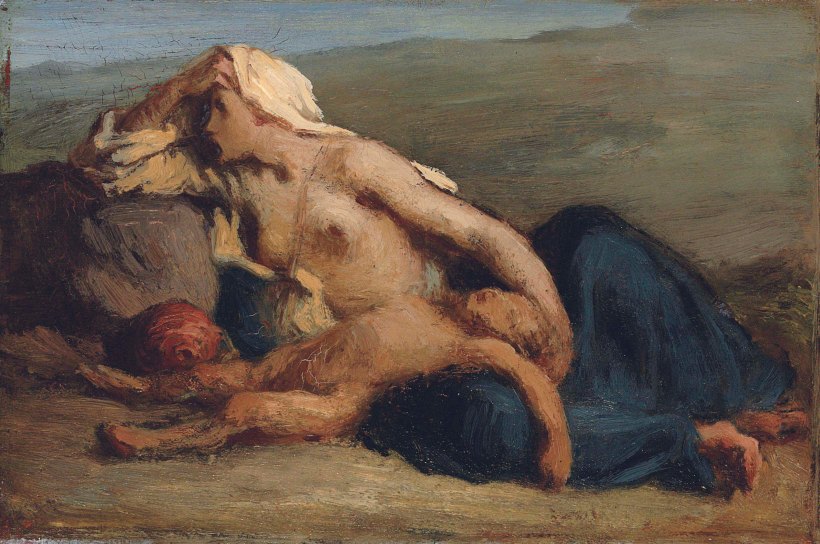
It was all night the couple fought, until Abraham emerged hungry from the red tent. His convictions were made of salt; eternally unchanging. The breakfast I prepared him, as fixed as his beliefs, was made of mutton on bone. His wife emerged only after all of the meat was scarfed down, his pink lips as drawn to grease as they were to preaching. Once finished he marched for Bethel with grain to trade for more flesh, Sarah daring to creep from her lair when he was long out of sight. Her ruddy face was caked in brine.

She wasted no time, “Hagar, go wash yourself in the river Jordan. Return to this home in a more godly state.”

Though her eyes never met mine my soul heard bath and refused to dwell on my master’s coldness. The slow river called my name daily, beckoning to me from the groin of the green valley. I longed for its cool embrace more than anything, but Sarah forbid me to answer its call without her permission. Only the voice of God stood at higher authority than her own, and the voice of God would never address a slave girl.

I ran for the hills with more spring in my step than April offered the desperate soil. I ran with ecstatic wind at my back, toes crunching through the soft shell of the desert with every stride. When skin hit water I felt a cascade of relief fall over each cell; once shiny with sweat and exhaustion, now as sweet as the blonde water licking at my curls. Jordan held me for hours it seemed, while several linen washers and water bearers of the village kept any stray reptiles at bay. When time came to fulfill my duty of returning in godly nature, I wrapped my body in a fresh cloth and held it high so that my giddy feet would not fleck the hem with dirt on my return home.

Abraham beat me; I knew because of the crescent lamb hanging up to drain outside the front door. She was a fresh ewe, probably frolicking not long before my bath. No doubt he had walked her all the way from the village; even the sacrificial lambs must labor for their fate. I found Sarah rinsing the knives out back.

Why would she have me bathe before the butchering? This question loomed in the air unanswered, raining silent suspicion down on the both of us.

“Abraham’s waiting for you inside.” She murmured, not bothering to look up from the wash.

I lingered long enough to expect reprimanding, but silver Sarah refused to acknowledge my presence. Punishment was a daily inevitability, and I always strived to know what I had done to earn it. Maybe, just maybe such knowledge could protect me in the future. I needed to ask what Abraham wanted with me, but my feet already knew. The turned back that Sarah offered told me that she knew, too. I had to force my legs to budge from her wake.

Inside the red tent time was at a standstill. Abraham looked at me deeply, his eyes wild with anticipation. He looked at me despite my clothes, he looked at me from the inside out. Always searching for something deeper, two blue eyes moving in reckless curiosity. Searching for something they would never grasp alone, but grasped for none the less. He grasped for my robes and then he grasped beneath them, hungrier than I’d ever seen him before. This fury of grasping and searching eventually left me in pieces. Neither body nor soul, I melted straight into the water that churned so freshly in my heart. I don’t know what he did, I didn’t dare ask. Pain consumed everything, and then it was over.

Outside the sun greeted me with hot urgency, and I panted for light. A trail of tears encircled an untouched lamb carcass and the carcass of a sobbing old woman. Infertile Sarah unleashed an abundance of saltwater from her tired body, a sea too acrid to support life of any kind. I stumbled past her toward the only relief I knew, Jordan. Rivers of my own blood trickled down my legs and the release crippled me; I wasn’t going to make it. I knew with each trembling step I took that I was headed for nowhere, but it was better than the somewhere that fate had given me. I called for nothingness.

I don’t know how I reached the valley but by the time I collapsed I was close enough to the river to feel its breeze. Blood was rampant by then, mixing with the earth beneath me like a bed of clay. I was sweating off heat but too cold to keep from shivering, each cell quivering to the beat of my bewildered breath. It was there, trembling in the dirt that I first heard the voice from nowhere. It called my name from no particular direction, unlike the river that always whispered from the east. This voice had no sound at all, but I heard it with every fiber of my being.

You are not a slave, you are no-thing. 

It was in the nothingness that I began to feel peaceful. The earth below me was alive, and beside me I heard the rush of Jordan washing away any impurities of the barren land, bringing life. Taking life. I saw the red water flowing from between my legs but I felt anything but empty, I wasn’t afraid. I knew then that God was no one to fear. No one at all, in fact; I knew then that I wanted to live. An old women destined to populate the earth with her body was much more a slave than I would ever be; I knew that I must return to her.

This is not your fate. There is more.

(To be continued.)

How can I be more expansive?

Last week I got to see Florence + The Machine for the first time, a band that I’ve been pretty nearly obsessed with for a long time. Florence Welch was an angel, filling up the stadium so effortlessly with a voice that soothed a primal need for validation I didn’t know I had. Even from the nosebleeds, I could see quite clearly that we were kindred spirits. After a week of feeling stuck under my own raincloud she broke down the barricades of emotional suppression I had built up for myself in one fell swoop, and then there was no going back. There was something about the way she moved, so joyfully uninhibited, that awakened a dormant free spirit that I had almost forgotten about. That fearless little girl inside of me who lived for cartwheels and frolicking in the sun was told one too many times to settle down, and so she did. For a while, anyway.

I trained myself to restrain myself because that’s what I thought mature people did. It was certainly what young women did, and good students, and professional employees… It was certainly what the role models in my life appeared to do. The churchgoers, the teachers, the coaches, and all of my peers who were far too cool to act their age. I was lucky to have parents that encouraged imaginative play, but my community enforced that the place for such a thing was not in public. I replaced my hyperactivity with stoicism, a much more socially admirable way of dealing with inner dis-ease. There seemed to be something so noble about having a large amount of restraint; it seemed fundamentally human, even. As I grew older I began to learn to move only deliberately, and only when necessary. I conserved my energy and then spent a lot of it in front of the TV, where the fragile identities I clung to were reinforced over and over again by the media. And soon they began to become narrower… kids had to be fashionable, women had to be skinny, boys had to be assertive cause girls couldn’t be. And I began to learn it was my job to suppress that elated inner child that so desperately wanted to come out and play. It was the only way to focus, and focus was the ideal of ideals.

In our culture individuality is wrapped in identity, and identity is totally dependent on focus. All throughout school I was told to zero in on the things that made me tick, and then obsess over them. I should weed out all of the stuff that I’m not great at, give up on it, and embrace only a couple of things that I should be great at. The first thing I was good at was being a girl, and my self esteem relied so heavily on it that I wouldn’t even associate with colors that weren’t designated for me. I was great at embodying some of the best feminine qualities, so identifying strongly with my gender made me feel stable. But in the long run, of course, this created some real problems, especially when I fell in love with another girl.

Oh no, what a masculine thing to do. Boys had been falling in love with girls since the beginning of time, that was the way the world worked, and now I felt like my identity as female was compromised. My friends in middle school started to call me butch, and I hated it so much. When my hair was short I once walked into the girls restroom and had some kids tell me I was in the wrong one… very silly, but it was enough to profoundly affect my self concept. That ‘butch’ identity wasn’t right for me because I thought it meant I wasn’t desirable, I wasn’t sexual, I wasn’t a normal woman. I was other, and I hated that. My identity wasn’t right, so for a time I even hated myself.

What a tragic phase of insanity I went through. Thank goodness I can now see what a narrow concept ‘identity’ is, and how limiting our labels can be. The societal rules of my identity as female allowed me a lot of options, but it kept me from accessing so much of my self. It made me vulnerable, because all those rules were just bound to be broken. So how can I be more expansive, how can I nurture all of the personas that I have been neglecting my whole life, and what does Florence Welch have to do with all of this? Well, she (and her openers, Lizzo and St. Vincent) showed me how to obliterate my identities.

In that concert stadium, time stood still. I was in bliss, and everyone around me was in bliss, especially the performers. Flo asked us to fall in love with a stranger, hold hands with the people next to us, and link up to the universal energy in the room that was pure magic. It was reverse individuation, I could feel myself dissolving into the crowd and at the same time having a deep sense of knowing that I was exactly where I needed to be. I had previously been so focused on my outward purpose and my outward place in society, that I forgot the first world I inhabit is my own body. Before I answer to anyone else in my life, I answer to my self, and all of the healing that needs to be done is internal. What rules and restrictions did I put up for myself, and how did they serve me? They served to limit me, and that’s about it.

I have now decided to identify first with my inner rebel for the time being, it’s a lot of fun. Definite destination will be the death of me, and it has been suffocating my creative process for far too long. Any time I sit down and write with an ulterior motive, my words suffer the consequences. But I have only just started playing with stream of consciousness writing for the first time, and it is awesome. Sometimes it makes no sense, but then all of a sudden a whole line will stand alone, and it won’t matter what is said before or after that line, because the words are so imbued with a kind of presence. If nothing else I get to watch my untamed fingers dance across the keyboard in that weird geographic motion that I haven’t seen since I was a kid… I’m frolicking through the pages again! I can’t type correctly to save my life, but damnit these fingers can play.

I feel like my true self, whatever that means. She used to seem elusive, but once I realized that I am her always, life has become way less dramatic. I can be so many different things at one time and be whole, what a revelation. I am so far from perfect. Even when I am sweet grounded well rested Laura, I am not completely severed from the exhausted, frustrated, emotional Laura that shows up on a monthly or maybe daily basis. She shows up and I see her and embrace her. Impatient Laura is a bit more of a dominant persona than I’d like, but I can’t just tell her to go away because she never will. She’ll always be in here and I will always have access to her and sometimes that will be exactly what I need. As long as I don’t lose sight of those other Lauras, then they are never out of reach.

Embodying that change is the hardest part, because so often we want to deny aspects of ourselves that contradict our identities. We build up the qualities that serve our identity and block out all the naysayers (even the ones in our own head) because otherwise we have no ground to stand on. This is what our egos tell us, but they don’t have our best interest at heart because they aren’t us. They are a projection of us, a picture of us, a piece of us… but not us. If we keep on living our lives to serve our egos then we might never be satisfied. Being is not something that can be chased; you do it now, or you miss out.

I have been able to ask people in my community to support me in my transitions and I feel so privileged. When I am feeling spread out thin and I can’t be a caretaker any more, sometime I get to just decide to be something else. Party girl! Or maybe I’m stuck in an archetype, a pesky one for me is The Socially Awkward Fool. Well, I’ll just make myself known! By saying: I’m the socially awkward one right now. But it’s when I see people smile at that, laugh even, and accept me, that the profound transformation happens. I’m so allowed to be the awkward one that I notice I am not even being it anymore, and not even trying. There is no restriction, no being without, no sense of lack. I am held in my imperfection by the people I love and I see that I always have been.

I am just feeling so lucky to have been lead to such an understanding this summer, I did not get here alone. I have witnessed so much beauty in the various life-affirming rituals I have taken part in. I’ve been at my best and I’ve been at my worst, and I have been loved. I have learned to take from others without depleting their energy, and I have learned to give without draining mine. I am not the famous writer/self-actualized outdoorsman extraordinaire that my youth aspired to be, but I no longer want that and my inner child is happy. Doesn’t that break the system?

Shoutout to Eckhart Tolle 🙂


Bury Him, Mary

I looked upon the scene before me–upon the mere house, and the simple landscape features of the domain–upon the bleak walls–upon the vacant eye-like windows–upon a few rank sedges–and upon a few white trunks of decayed trees–with an utter depression of soul which I can compare to no earthly sensation more properly than to the after-dream of the reveler upon opium–the bitter lapse into everyday life–the hideous dropping off of the veil.

-Edgar Allan Poe, The Fall of the House of Usher 


Mary crouches over a row of needles, queasy with hunger. It’s daybreak, perhaps later; the cabin is engulfed in an opaque plume, thick as the window curtains that conceal her from the world. A nagging fear creeps up her shoulders like an old tick, a fear that her rations are dwindling. They are; she’s nearly out of dope and she can’t bring herself to believe it. Drops of white opium rush to the far reaches of her body, leaving in a fury of perspiration. Beneath her, tepid bath water lifts ancient stains in the carpet, carrying them to the corners of her bedroom in a delta of brown froth. The bathtub is long overflown. It remains concealed behind the locked bathroom door she leans against, where she watches her oasis become a floodplain in the dim light. Joining the flow, angry tears begin to gush from her eyes and she doesn’t know why.

There’s not enough of anything around here.

Mary doesn’t stir. She’s heard me speak so many times before, it’s a wonder she doesn’t recognize me now. I would guess it has something to do with the pills she stuffed in her mouth a few hours ago; clinging to the inside of the bottle, they were the last survivors of the flood. She hadn’t noted the dose but they had helped her fall asleep fast, so it was no matter; now she is only half awake. She can do nothing but take inventory of her provisions again and again, as she fights fatigue and clings to a bottle of whiskey.

Disheartened, I make the house shake with discomfort. I make fear ooze from her brain and her neck hairs stand on end. I make her body ache inside her own skin, I try to make her loathe this place and everything in it. I do so much but it’s never enough, she doesn’t listen to me anymore. She’s stopped checking in with the little voice in her head and she feels like she’s fine with it.

Alcohol makes her feel like she’s fine with everything, even though she’s got nothing left. Deep down she yearns for her body to spin again, like the Gravitron she used to ride at the county fair. As a kid she had always wanted to get out as soon as the rickety old spaceship started revolving, but as it got faster and faster she would begin to feel so alive. So queasy, but so alive; she loved being out of control. Now the reminder of it puts a bittersweet knot in her throat; nonconsensual nostalgia. It feels like a lifetime since she’s longed for anything different.

The bedroom is colder than it was yesterday. Without a draft to keep moisture from sticking to the walls it just keeps getting more humid. It will never be the same again after last night, and Mary has no idea why. Her husband’s dead, that’s why, but she still anticipates the anger that the overflowing bathtub will inspire in him. The well is nearly drained, downstairs the ceiling is raining, and the bedroom floor is ruined. It’s as if the house is trying to cleanse itself, and failing.

The bedroom carpet isn’t capable of getting clean, either. Covered by all manner of her husband’s bodily fluids, it must have been too shocked and humiliated to protest. Forever absorbing the dirt and grime of the people who trod on them, Mary and the carpet are a lot alike. Stained by the same culprit, they endlessly yield to his drug-induced rages. Now, as the bitter taste of alcohol causes her to squirm, she becomes consumed with a steadfast ambivalence toward him. The same ambivalence that allowed her to part her legs when her stomach swirled with disgust, the same ambivalence with which he used to use her. Those were the good old days, long before “no” made its way into her vocabulary and became his new favorite word.

Inside her ear I whisper, bury him, bury him, bury him, but she ignores me. Hidden inside her belly is an itch she’s desperate to scratch, and no measure of domestic catastrophe can disrupt her obsession with it. Until she musters the courage to kick down the bathroom door she will remain listlessly confused, as usual.

Even without her husband anywhere near she can still feel his presence. Her neck tingles from the phantom scratch of his chin against her skin, and his calloused hands wrapped around it. The same hands he used to pack her fresh bowls of weed, to tuck her in at night, to strangle her; as if clasping for some semblance of affection that he had already destroyed. He used his hands to pay the rent, the electric bill, the water bill, and he used them every day to constrict her arm just above the vein.

Everyone she knows tells her she’s gone too far, done too much, but inside she feels utterly empty. Maybe it’s because they’ve stopped calling on her. Maybe it’s because nobody bothers to visit anymore, or maybe it’s the oxy that deprives her of any motivation to reach out. She certainly lets it keep her from doing most things, like ever leaving the house. Today she is far too preoccupied with her fix to do anything to help herself. Looking down at the remains of liquid left in a few of her vials sends a shiver up her spine; does she think they are going to get up and run away? If only she could squeeze a drop from each needle into her veins it would be enough to keep the shivers at bay, at least for a while. She takes a long swig from the bottle; for now, this is the last window into that cool limbo she craves.

Or so she thinks. Behind the locked door and the torn shower curtain her husband’s body begins to relax, just starting the process of decomposition. Murky water overtakes Mary’s color coded bath salts on the sill of the tub, the kind she uses for more than bathing, creating an aroma of rotting lavender flesh that she cannot make sense of. Each item she had meticulously assigned a home has been displaced; the bathroom is in total disarray. Bubbles continue to escape from her husband’s wet mouth but the sound is drowned out by running water, and she hears nothing.

Mary is a compulsive woman. Usually too keenly aware of any disturbance in her home, she is nothing if not vigilant. To her husband this behavior had warranted constant supervising. The four rooms of her home: kitchen, living room, bathroom, and bedroom, have come to replace the four compartments of her erratic mind: the hungry, the tired, the sick, and the desired. Without the visual of her structural surroundings she is too easily lost. At times, the fragile walls of her home have been all that have kept her from floating away. It makes sense that she should want to keep track of them, especially during those wildest hours when they almost seem to move on their own.

Unprompted, a sharp popping sound echoes up the stairs. The case of beer bottles she stored in the freezer has finally exploded and shattered, and she has no recollection of putting it there. Rich amber slush coats the carcass of a half-frozen orange tabby cat stored in a shoebox, distorting the words hastily written there in red ink, “Bury him Mary.”

“Baby?” She calls out, positive that he has just come in the door.

She’s on her feet before her drunk muscles surrender to gravity, but manages to hold herself up with the bathroom doorknob. Swift memories begin to make their way into her mind, glimpses of heroic escapes she’s made from the bathroom window. Many times she has locked herself in there, frightened by an apathetic tone in her husband’s voice or the indignation with which he pounded on the door. On those nights that his impulse control was at its scarcest she had even made the leap of faith to the mossy forest floor. Sometimes she ran the bath to mask the noise of it, feigning that she just needed a moment to relax. He would never let her out of sight, let alone earshot, making these futile escapes all the more daring. He was a much better manipulator than me, but I still do everything I can to encourage the delusion.

You better run Mary.

At the thought of his presence she can almost feel the cold earth beneath her bare feet, the adrenaline pumping through her, the sound of his laughter and the way it resounded through the woods in her wake. “Come back baby,” he would say, “I’m not going to hurt you.” But he always did, even in his attempts to appease her; all he had to do was mention heroin and she was reminded of the power he had. Without him, she would die. With him, she was dying. Her life existed somewhere in between those two spaces, in that dreamlike state that allowed her to forget who she was and what she had done.

Now, only fear seems to awaken her elusive rationality. I raise my voice.

He’s mounting the stairs.

Expanding wooden beams send creaks throughout the whole house. As my words begin to sink in paranoia manifests every inch of her being. Before she knows what to do her knees bring her back to the ground, smashing a few of her vials and embedding glass in her skin. Worse, the last of her heroin washes away with the blood. Some part of her knows that today is not the day she is going to get away with wasting dope.

She feels guilty, it’s written all over her face and body. She can’t stop thinking about him walking through the door and finding her in this puddle of grime that she blames herself for creating. She can’t stop thinking about what she must have done wrong and everything wrong with her that impedes her from fixing it. She doesn’t remember who started the mess but if she did, she’d be free of him. If she did, she’d know this was all his fault.

If only she could see through the walls the way I can. The substances she takes don’t do what they’re supposed to anymore though, they are hardly even real. Her husband had so much to say about heroin that she started to wonder if he invented it. But then his words got bigger, more aggressive, and he began to tell her everything he thought he knew about her. He reinvented love, redefined sex in his own way that left her believing it was his birthright. He might as well have invented it, too. The way he talked about her body left her feeling like it was his, and if ever that was true it certainly wasn’t anymore. I would do everything I could to show her that.

Don’t let him see you like this.

Mary knows she can’t go on like this anymore, I hardly even have to tell her. Her husband felt the same way last night, thank goodness. The world obliged him. Without hesitation, the space that he had filled in the universe was drowned with the energy of everything that was still living, and that was the end of him. All it took was too much heroin and the lack of a heroine when he needed her most; she was too busy sleeping in his mess. So, in accordance with two awful truths, he was quietly set free; death is discreet, and death is sweet. But he had met death long before the sun even found a place in the sky, hours had passed since then and still the memory of him threatens to consume the last of his wife. How lasting the effects of trauma are on the mind. The fear inside her rouses nerve from the pit of her stomach, and before she knows it she is slamming her body against the bathroom door with all of her might.

Put your back into it Mary.

It’s what he used to say to her all the time, whenever she was bending over backwards for him. This time it works. Triumphantly, the door finally releases itself from its hinges. Behind it a sickening silence sweeps from the floodplains of the bathroom. Rounding the corner, she glimpses the last of him; a bloated body floating in the bathtub, apparently dead for some time. Her husband: naked and exposed in all of his glory. The most glory, in fact, that he had ever possessed; in death his demeanor seems almost peaceful as his carcass bobs to the rhythm of the faucet. Mary’s red hands clash with the warped linoleum beneath her as soon as his popping blue eyes meet hers.

Death is all around her. It’s in every nook and cranny of her decrepit house, and it is inside of her, too. I feel myself dying with the tears that refuse to appear in her eyes, dying with the remorse that she does not feel. She doesn’t need me anymore, so it’s my time to go. I know this, because her husband’s left over syringes are full of enough dope to keep her occupied for days, and she ignores them. I know this, because her body is far too weak to support her but she stands anyway.

With one last ping of regret for the wastefulness of it, she turns of the water.

She does not exit that place on her own, she is forced out. Tossed, as if swallowed by a wave of longing and spit forth onto the shores of the outside world. Relief comes all at once. She is not alone, but is carried out with the wreckage of the unphysical home she built for herself; everything she has ever known gushes out that front door with her and she doesn’t look back.

Outside the ground is sodden, too, enough to swallow her feet in moss and leaves. It’s a distant but familiar feeling, one that fills her with the kind of nostalgia that warms her very bones. Her legs are steadier on solid ground, and the foggy air around her is the sweetest thing she’s tasted in months. Her body is much cooler in the strange mist around her house and, not because it still hungers for the one thing she can’t have, her body feels light. Misery gently removes itself from her shoulders.
Ramblings from your favorite three-dollar bill

One of the less encouraging things that happened to me this year was when I got fired from my first writing internship. It had been an unpaid internship, and I’m not sure if that fact made my dismissal more painful or less. The position was at a quirky little agency in Portland where I was tasked with sourcing content for a new literary database, the eventual use for which I am still unclear. Naturally I was about as gung ho as any intern could be; I was stoked about shadowing an author of such apparent caliber, and every time I heard my then-boss drop a big name in the business I became more convinced that he was not a human, but a literary deity. Unfortunately, as I have found to be true before, my first impression was misguided. I held the position for about three weeks, for which I had uprooted my entire life, until suddenly one morning I was called into my superior’s office (a sick treehouse-like writing oasis) and sent on my way with an obviously repurposed Starbucks gift card.


This, of course, was shortly after I had begun working as a barista. In all fairness I had already come to terms with the fact that my position was not very rewarding for me anyway, and I guess my boss agreed that it was unfair to keep me on any longer. That I respected, but he also told me that if I had only had about ten years’ experience under my belt I would have been much more useful to the agency. I’m sure I don’t need to detail the irony of that statement. Alas, since I was in the fragile position of being a lone sojourner in a new city I had no choice but to look at the positive. I was happy that this internship had at least brought me to Portland, where for the first time I felt like I was more or less home.


I lived in the attic of a house that I shared with several other dudes in Alberta Arts district. I loved the area and rent was cheap, so I went for it without giving it too much thought. I spent my first Christmas away from home exchanging white elephant gifts with my roommates, and everything was just dandy until the perpetual rains of the Northwest produced a multitude of insect refugees that decided to hunker down in my attic. At first it was just an ant here or there, but little did I know my abode was soon to become a winter wonderland for microscopic squatters that would leave the scent of citronella ant guts lingering in my nose for months to come.


By March I had ants sharing my bed with me. From the windows to the wall, they could be found in every nook and cranny of my room. Ants manifested two of my space heaters to the point that they no longer worked. The worst part of it all was that my very lifestyle enabled their presence, and though I wasn’t opposed to using traps and poison to get rid of them, I was simply up against too many. Seasonal affective disorder had never felt like such a tangible illness and soon enough the madness had me tearing off the plastic around my draftiest window, the one with tiny cracks all around the edges, just to let a little light in. I think this was a turning point for the ants; were they really living in my room or in my head? I still can’t say for sure.


Luckily cannabis is legal in Oregon, and it can’t be surprising that a river rat like myself has been known to indulge in the substance from time to time. But was it coincidence that these six-legged fiends somehow seemed to show up every time I opened my window to cheef a quick bowl? I think not. I became convinced that those little fuckers were drawn to the aroma of a good dank herb just as much as anybody. They knew that a rainy day off for me meant a time of rich abundance for their colony, and so they eagerly awaited the mass of crumbs that fell from my bed like a feast every time they got a whiff of that botanical kryptonite. It was a vicious cycle; my frequent binges were their greatest and most reliable source of food.


A saga that is so comical in hindsight was at the time a small devastation to the fantasy I had envisioned for myself in the City of Roses. I had landed in Oregon during one of the coldest and rainiest winters in years, failed at a job that I considered to be a shoe-in to the NW writing scene and was subsequently displaced from my home by an army of tiny vermin. Always a sucker for drama, I can’t say I don’t at least appreciate the poetic value of my misfortune, but it’s taken me a while to get to this point. Ten months ago I made my last blog post, and since that time I have been struggling to find my way through this enduring creative dry spell. Last month my neglected website descended into domain purgatory and I nearly lost all of its content. I am beyond happy to have it back in working order, and though my stories may be less compelling than I had hoped, I feel lucky that I still have the opportunity to release them into the wild. The fact that my closest friends and family take the time to keep up with me on my journey makes me feel as validated as any readership could, and I’m just so thankful for you.


As I sit in my cozy gypsy caravan in the snow flecked foothills of Mt. Rainier, I feel more at peace than I have all year. I don’t know how I managed to score a life partner like the one who built this home with me, but every day that I wake up next to her I know I am doing A-okay. I am currently without a permanent residence, unemployed and unable to start school until next year. I am absolutely dripping in privilege, and the last thing I want to do is let these precious few months go to waste. Do I batten down the hatches and travel up and down the west coast? Write that novel that has been occupying the whole left side of my brain? Roll a few dubies down by the river? I only know what I’m definitely not going to do, and that is to let shame and insecurity get in the way of being my true self. In this time of corruption and uncertainty we can do nothing but assert our humanity, and I have found no feeling to be as liberating as giving in to my imperfections, hopefully finding the humor in them.


So much more easily said than done, the road to self-acceptance extends far beyond my vision and I’m sure I’ll be traveling it for some time. The past few months have been a whirlwind of both anticipation for the new life I am building and the reflection of the fast, fleeting summer I leave in my wake. I am no longer a lone sojourner in a new city but one half of a partnership that seems to grow stronger and more powerful by the day. It’s never been so easy to share everything that I have. Jenny possesses the same bold sweetness of that 12 year old girl I befriended ten years ago, but now holds in her presence a mysterious wisdom and poise that is both terrifying and electrifying. I did it, I got mushy and sentimental, but I’ve honestly never felt more entitled to it. Just the other day we were perched up on our rooftop patio in the prime real estate area of King’s Heights, where we were parked for the night above a city that seemed a hell of a lot smaller than it used to. It was one of the many times in my life that I became aware of the fact that I have everything in the world; that knowledge has so far been my best defense against the inevitable lows of adulthood.

The gray matter of veganism.

I always enjoyed consuming animal products. Though it’s been over five years since I’ve eaten any meat, I can’t deny that I don’t sometimes crave it, and I continue to occasionally consume animal by-products. The reasons I chose to eat more ethically are pretty standard;  I love animals, I’m horrified by factory farming, and think I’m healthier without eating meat. However, over the years I’ve also realized that simply not buying animal products is not a particularly effective way to end animal suffering, especially without being mindful of the numerous other ways I contribute to the meat industry. Recently I’ve begun to embrace a less rigid approach to veganism and I not only feel healthier but feel that my lifestyle is more sustainable, and in many ways has a greater impact on the lives of animals.

Like sexuality, spirituality or anything else one uses to identify themselves, dietary choices are not always something that can be easily explained. For me, being vegetarian is built on the basis of flexibility, and it seems to be working pretty well. It wasn’t always that way. When I first gave up meat I was happy to condemn everyone from ranchers to hunters and fisherman, but I still gladly consumed dairy products as my primary source of protein. I was in denial of the realities of the commercial dairy industry, and was somehow able to justify supporting it while I pointed my finger at other people. Since then my views have evolved, and I’ve come to accept that advocating a meat-free diet may not be the most practical way to support ethical consumerism.

In my experience I have found that some meat-eaters tend to view my lifestyle as privileged, and they aren’t necessarily wrong. When I look at the veg community in the Pacific North West, for example, I see a white-washed group of upper middle class liberals who are devoted to a strict brand of veganism that is not always welcoming to outsiders. A youtube search for vegan recipes brings up a multitude of videos made by urban stay-at-home moms, a demographic that only a small percentage of Americans can relate to. Do I condemn this group of people for their unbending and sometimes unattainable dietary choices? Not at all, I think it’s wonderful that some people have the resources to be healthy vegans and raise vegan families, but I do acknowledge that this is not the reality for many of us. Even I have trouble attaining the nutrient-rich vegetarian diet that I strive for, and I live a block away from Whole Foods. But it is not just the logistics of adopting a completely plant based diet that I struggle with, it is the elitism.

After volunteering on WiMo dairy farm, I was lucky to be able to eat all of the organic milk, eggs, cheese and yogurt that I wanted. While the conditions on the farm were not perfect (as I’ve detailed in some of my older posts) they were so much better than the norm. These cows were valued for more than the milk that they provided, and that made a world of difference. In Boulder, CO, raw milk is a hot commodity, and that is exactly where we sold the majority of our dairy products. Even with the support of the community, it’s important to note that the work required to maintain such an environment is not always economical; the farm I lived on never made a profit for their efforts, and barely broke even. When making a profit is the primary goal of a farm, the ethical standards start to drop significantly. As you can see in the picture above, mass-production dairy feedlots provide a very different reality for animals. As I saw first hand when I rode my bike by the Caballo Dairy in New Mexico, the abuse of veal calves is such standard practice on commercial dairies that farmers don’t even attempt to hide it from the public.

Do I think everybody is ready to embrace raw dairy products from ethical family farms? Though I wish it were the case, I have to say no; not when milk shares start at $20 a gallon. Until there is money to be made in the ethical agricultural business, it seems like it will continue to be an industry only for the elite. In my search for commercial dairies that don’t use veal calves, my results were just as depressing. My goal was to provide a list of cruelty-free brands of milk that are readily available, but I’m sad to say that none of the major commercial brands I researched made the cut. Without readily available cruelty-free dairy options and as most Americans continue to consider dairy to be a staple of their diet, one begins to wonder how best to conquer the high demand for cheap animal products. Instead of trying to find ways around supporting an industry that will always value efficiency over the health of animals, maybe we need to focus less on what we eat and more on where it comes from.

If not being able to give up your favorite foods is what’s keeping you from going veg, by all means, don’t give them up! Maybe you can’t give up your Toblerones and Hershey’s kisses but you’re ready to replace your hormone infused dairy milk with a much healthier plant-based alternative. Maybe you can’t give up any dairy products, but you can support a local farm by buying their pasture-raised beef. This method may not be perfect, but I still think it is a big step in the right direction. It is disconcerting to see two groups of people that are on such polar opposite sides of this issue. Can’t we all agree that supporting small businesses is better than giving all of our money to huge corporations? If so, then buying local is the first step.

If you love animals and you want to make a difference, do whatever you can to reduce your impact on their lives and, more specifically, their deaths. If that means you still enjoy the occasional steak or burger, don’t let that stop you from advocating for animal rights. If you think that confining calves in small cages and forcing them to stay immobile is wrong, take a stand against buying veal. Support ethical farms whenever you can, even if that means buying your steak from them; this part just may be the key to seriously changing the factory farming industry for good. It is up to us to define what the future will look like for livestock animals, and while a vegan world may not be on the nearest horizon, I think that a more ethical, free-range agriculture may be.


Finding hope in the moderate male.

Over the past few days I’ve been at a complete loss for words. In a state of shock, I went to bed on Tuesday night feeling alone, but knowing that I was far from it. I was completely shaken by the knowledge that America had elected such an ignorant and inane POTUS as Donald Trump, and I struggled to find any kind of silver-lining. Hillary Clinton’s concession speech helped to relight a fire in my soul, and I realized that this disappointment and setback was merely a taste of what women and minorities before me have felt since the dawn of time. As I watched my friends and family dust themselves off and begin to rally, I realized that wallowing in my fear was not going to make me any safer. My voice as a queer female has already been suppressed by that fear for too long, not to mention by the very demographic who have enabled this disastrous outcome.

What I found as the initial shock of the election faded was that these results are not as unbelievable as they first seemed. We live in an incredibly backwards country, one that has systematically oppressed racial minorities, immigrants, women and members of the LGBTQ community for too long, indeed. While we have made significant strides of progress, we are still embarrassingly behind many of our Western counterparts. This is the same rhetoric that has been flooding social media all week, I know, but there is good reason to keep the discussion going. If we (liberals, activists, decent human beings, etc.) intend on turning the tides once and for all, we have to convince the other half. I urge those who are privileged enough to threaten to pack up and move to another country and those who have gone on an unfriending-rampage against all Trump supporters to please think twice. There are people in this country who are desperate to stay here, terrified of being deported, and who need the support of their allies now more than ever. In order to turn this country around again in 2020 we can’t give up on each other, and we especially have to find a way to reach those who were so blinded by party loyalty that they couldn’t even vote against a poorly spoken nutcase.

In all honesty, the moderates have been more than a bit of a frustration for me during this election. There are some situations where it is great to stand in the middle of the road but I don’t think there is ever a time that it is morally valiant. That said, I know the two-party system is a huge problem and I wish our democracy worked better, but I’m not even going to go into how maddening it is that some democrats voted for a third party in this vital election; we already know what a mistake that was. Instead I am going to address the non-voters; what were you thinking? If you are young and uninformed or too lazy I can at least understand your excuses for being idle in the face of adversity, but to those who didn’t vote because “both of the candidates were so bad”, you seem to be hindered by sexism. There is no other explanation for even equating an intelligent and qualified albeit shady women to the highly under-qualified travesty that is Donald Trump, besides an intrinsic prejudice against women. You may try to hide it, you may not even be fully aware of it, but it’s there, and it’s just as toxic as outright male chauvinism if not worse. I’ll tell you why:

  1. The sexist in denial is the same person that enables male chauvinism by not condemning their peers, often defending them with a certain brotherly support that is as petty and juvenile as peer pressure.
  2. Female misogeny is a word that is becoming more popular than ever, stemming of course from the privileged white women who is in denial of the oppression that non-straight or non-white women face. Not to be confused with misandry, the female misogynist is a women that is hyper-feminized and condones the polarization of the sexes. The outdated belief that men and women are drastically different from one another is hugely detrimental to both genders, and once again enables intrinsic sexism. These are the type of women that voted directly against Hilary Clinton.
  3. Lastly, the ambivalent majority will continue to oppress minorities as long as their beliefs are backed up by conservative religious ideologies. It’s like a socially acceptable excuse to treat women poorly. Unfortunately, religion is at the root of many people’s prejudice toward women and is also to blame for demonizing the word “feminism”. It’s hard to combat this, because holy hell if people aren’t sensitive when you attack their religion! Sorry, I’ll attack any institution that threatens to limit women’s access to health care. *cracks knuckles*

I may sound like I am attacking only a specific group of people, and that’s the last thing I want to do. In fact, the straight white male demographic may itself be facing prejudice for the first time ever, and I know it’s not a good feeling. I already see a lot of my male friends on social media feeling obligated to prefix their entries with things like, “I know I am privileged and may not be able to relate to systemic oppression, but here’s why I’m saddened by this election.” I would hate for my anger to add to a new stereotype that labels a whole group of people as ignorant. Of course, social psychology tells us that all stereotypes are rooted in some kind of truth, and that truth is stemming from the fact that straight white males are largely responsible for the election of Donald Trump. Even so, we know that not all men find him acceptable. In fact many straight white men are appalled by all of the same things that I am, and it is those men that I urge to speak up! We want you on our side, we will not lose faith in you, and we need your support. Please don’t let defensiveness get in the way of activism, we feminists certainly don’t.

Last week I returned from my journey across the deep South expecting to find a much more enlightened pre-election atmosphere up here, but I was wrong. As I drove home I passed by one of the most disgusting displays that I have seen all year. A scarecrow tied to a cross with yellow caution tape had a picture of Hillary Clinton’s face stapled to it, had slurs written across the body and had its feet bound to a tire. A cardboard cutout of Trump has since been stolen from a makeshift podium that stood nearby, and several of the many campaign signs from the yard have been taken down. Still, the display remains in broad daylight, where children walk home from school every day and can often be seen pointing to it and laughing. The disservice many Americans have done to our country’s children is perhaps the saddest part of this election. I can only hope, as many generations before me have, that things are different for my own children one day. This is one story that I never wanted to be able to tell to my grandchildren, but now all I can do is join the fight to make something good come out of it. I hope we can all fight together, so that one day our Muslim, Hispanic, African American and LGBTQ brothers and sisters no longer have to live in fear.


Steps to Reduce Animal Suffering, Part 1: Dismantle the Patriarchy.

Seven cats and two dogs were beyond my help in the states of Texas and Louisiana. Using plastic bags and scraps of paper, sometimes cardboard boxes scavenged from nearby trashcans, I did my best to at least move them out of the road. I don’t really know why I felt so compelled to do so. Maybe because it forced me to acknowledge them, instead of just continuing on down the road like the very cars who had taken their lives. The act of carrying their bodies, many of them still warm, slowly but surely caused me to become used to the experience. I was their pallbearer by default; absent from their lives, yet somehow profoundly impacted by their deaths. Maybe I should have left them where they died, so that others would see them and slow down or drive more carefully. Unfortunately, the ammount of roadkill I saw on a daily basis in the rural South convinced me that most drivers were too entitled to care.

Entitelment is the word that comes to mind because of the numerous degrading experiences I have had as a female cyclist. I have been driven off of the road by several men in trucks, had thick plumes of exhaust deliberately blown in my face by countless men in trucks, and have received immeasurable unwanted attention from men both in and out of their trucks. It isn’t annoying, it is far past that- it is terrifying. If I have to watch one more man in a truck run over the body of a dead cat in the road I am going to explode. It is apparent that many drivers have no problem gambling with the life of a cyclist simply because we have the audacity to share the road with them, so it is not surprising that they seem to have complete disregard for the lives of animals on the road, too. I imagine it is incredibly painful to get hit by a car; and believe me, I have had plenty of time to imagine it. Sadly, I know these drivers are not stopping to check that the animals they hit are not suffering, because they can’t even be bothered to step on their brakes for the few seconds it takes to safely pass a cyclist.

This breaks my heart. I feel so overwhemed by the amount of animal suffering that I have witnessed in the past few months that I am completley exhausted. A recent conversation I had with a man in Alabama as I removed one of the aforementioned cats from the road sums up the type of blatant ignorance that I am referring to when I say “Southern Entitlement.” He wanted to know why I didn’t stop to move all road kill (squirrels, raccoons, armadillos, etc) from the road. I told him there were simply too many. He responded with the same level of stupidity that I encounter when people accuse me of being cruel to vegetables after finding out I am a vegetarian, and said, “Then you aren’t a real animal lover, are you?”

Oh yes, I am a real animal lover, and I am sick of that part of my charachter being used to discredit my rationality. It is not irrational to be kind, and yet I find myself constantly having to justify myself as an activist to much older people who think that being “middle of the road” is the only way to be a realist. What part of being a feminist, animal-loving liberal activist makes me weak? Could it be that all of these qualities challenge the patriarchy?

When it comes to understanding why a certain demographic seems to be at the root of these problems, I find myself constantly trying to avoid stepping on toes. So here’s my obligatory disclaimer; not all men are careless towards animals and creepy to young women, of course I know this! It has been my beleif for a long time that the patriarchy is nearly as detrimental and limiting to men as it is to women. In fact, it is the gentle, kind, and respectful men in my life that cause me to be so concerned with the toxic (and fragile) form of masculinity that is rampant in the South, particularly among far right-wing conservatives. How many of the trucks that drove me off the road were sporting Trump/Pence stickers? 3 out of 4. That seems incredibly relavent to me, so much so that I don’t think I need to moderate my opinions on the subject of male agression and the negative affect it has on the welfare of animals.

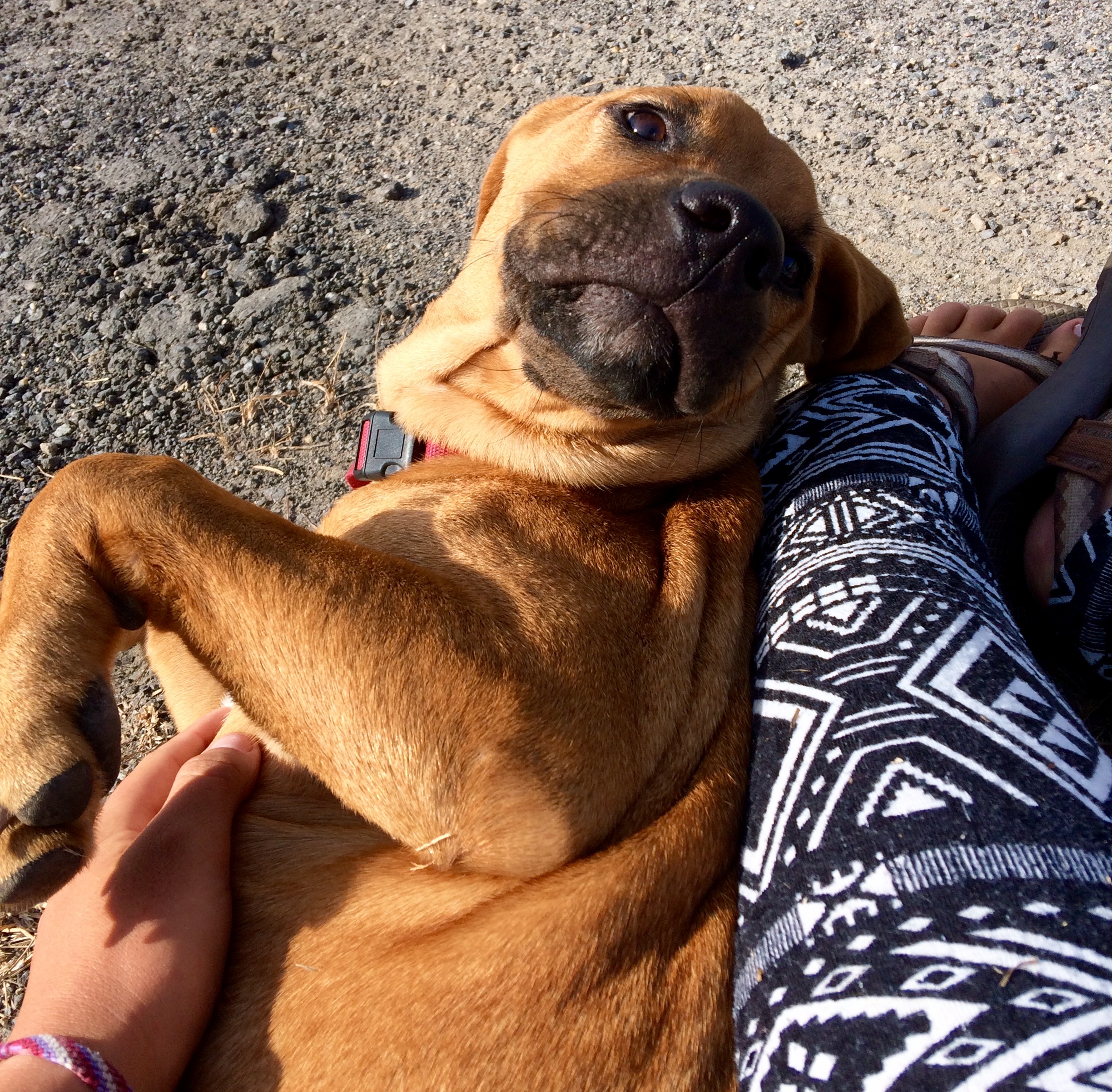
The latest stray puppy that I had the pleasure of rescuing from the middle of nowhere was a tiny brown pitbull named Hazel (see below). She, like many of the rescue dogs I have met in my personal life and on the Southern Tier, was terrified of men. How she developed this fear is only to be guessed at; maybe she was being molded into a fearsome watchdog, or physically abused in any number of ways. Her condition was made worse by the other men in my company when I discovered her, whose suggestions for her welfare involved throwing cookies at her, yelling at her, and slamming the van doors to scare her away. She was growling and appeared to be agressive, especially when the sherrif showed up and tried similar tactics to wrangle her. It wasn’t until they all left, and the women on my cycling team were left alone with her, that she emerged from her hiding place, wagged her tail, and let us rub her belly.

The agressive display of dominance that some men feel obligated to express could have cost this sweet pup her life. The sherriff told me that if he took her to the shelter and she growled, she would be euthanized. Another rescue I called said all pounds in the area were under orders to put down every pitbull they receive. It is evident to me that improper treatment is what causes this particular breed to become agressive in the first place. That was obvious yesterday as I watched Hazel cower in fear under the shelter of our company van.

Only by a stroke of luck did I come into contact with an organization called Lucky Puppy Rescue, and that is exactly what Hazel was when I brought her there. Run by two women who care for about fifty dogs out of the kindness of their hearts, I was incredibly releived when they were able to take this puppy in. I could see right away that the dogs in their care were given the treatment they deserved; they roamed freely together in harmony, were well behaved and trained, and hardly barked when I arrived with their new playmate. Almost all of them were rescued strays, and almost half of them were pitbulls. That sounds like a miracle to me.

Below is a picture of the owners of this rescue, Teri and Becky, with a few of their dogs. They are running their rescue solely on donations, so if you are able please help them out, I can’t think of a worthier cause. I have also included a link to their webpage.

I leave this entry on somewhat of a sour note, as I try to remain optimistic about the conditions I have seen in the deep South. I can indeed confirm that chivalry is not dead, but neither is racism, sexism, classism and homophobia. However, a lot of innocent animals are. While this reality is true in every part of the country, this area seems to have an uneven distribution of ignorant and entitled people.

img_7375

img_7399

Visit theluckypuppy.org to donate.