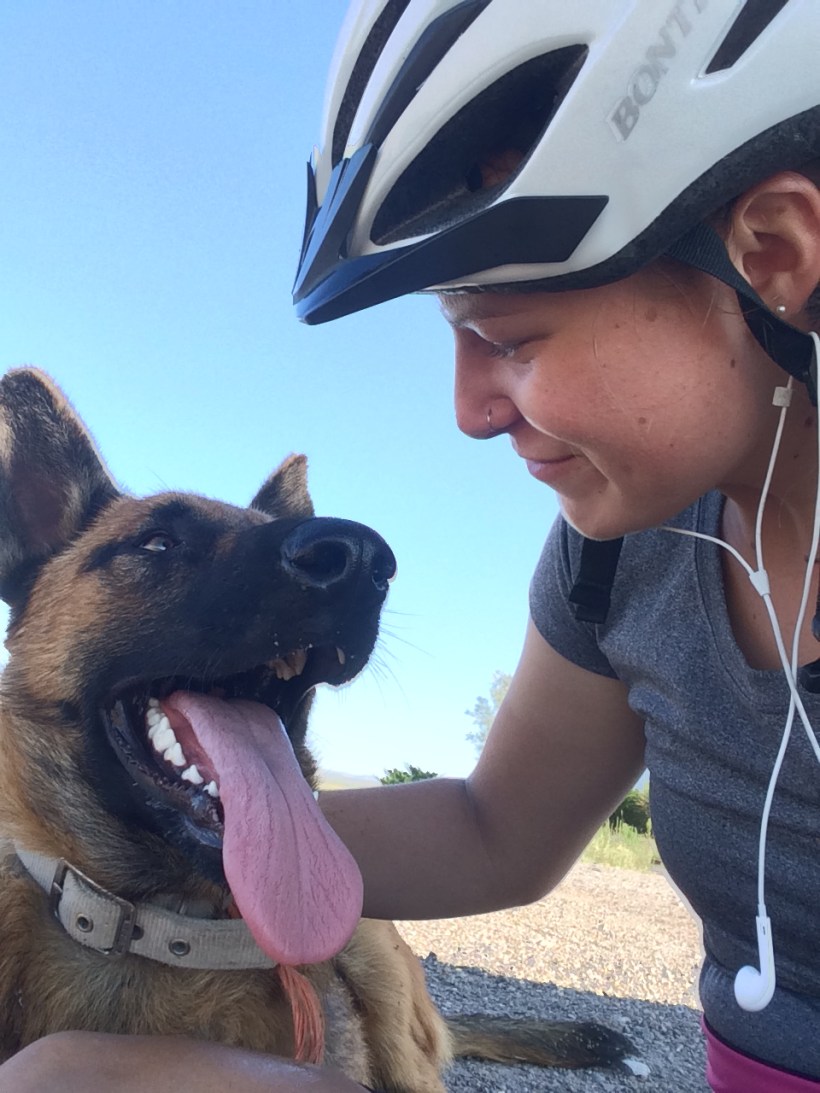
Carefree; the state of being free from anxiety or responsibility, one of my favorite words. As I grow older its meaning seems to become less and less relevant to my life, but I am eternally craving the feeling. I have always associated it with being calm and optimistic, never careless, never oblivious. Last Thursday, however, I learned that even being carefree comes with a price.
As usual, the morning was cool and refreshing. An electric midnight storm had left a puddle of water around my tent, but under my covers I had stayed warm and dry. I love night’s like that; when I don’t have anything to worry about, at least nothing besides my own comfort. I have learned time and time again just how fleeting they can be, and yet I always seem to take them for granted. This one, however, I savored; all I had on my agenda for the day was a mild, secluded bike ride. As soon as the sun rose to burn all of the moisture away, the atmosphere became immediately hot, as it does every day in the desert. It was around 10am when I met the animal that would take away my peace of mind for many nights to come.
He was just another homeless dog; a swift silhouette on the horizon, prancing the abandoned roads in search of something to eat. Down here, trash is not hard to come by, and maybe that’s why he wasn’t emaciated. I got off of my bike, all too aware that if I flew by him I would be a perfect target to chase, and started speaking in a soothing voice, not wanting to inspire an attack. I know this fear is just extra weight that I carry with me for no reason at all, but I’ve always been especially cautious around these types of animals.
Most Southern Tier cycling websites suggest riders have pepper spray at the ready, because many of the dogs in the South are raised solely as watch dogs. I don’t do that because I can’t imagine ever bringing myself to actually use it, so maybe that’s why I am always on edge. Anyway, it goes without saying that this dog was different. He was shy, but he was irresistably sweet. This pup was so tired that when I so much as gave him the acknowledgement that he had gone without for so long, he immediately fell into a deep sleep beside me, exausted fom god knows what he was doing.
Dozens of flies swarmed the cuts on his face, as fire ants went about building a nest only a few feet from us. He didn’t stir. After drinking the rest of my water, I think he finally felt comfortable enough to rest. With his head on my knee, we waited under the shade of a billboard for hours while animal control drove out to us.
I feel like calling animal control was my biggest mistake. This sweet animal had done nothing but kiss me, and trust me, and wag his tail at me. Still, when the officers came to put him in their truck, they were not gentle. I can only imagine how scared he must have been in that dark metal box that they put him in, and for good reason. So many abandoned animals take their last rides in that truck, before they spend their final days in empty cages. That is exactly where this dog was headed, and I knew that. The next day, when I went to the shelter to “bail him out”, I saw for myself just how bleak this particular shelter was.
I spent the next 24 hours conflicted with the idea of trusting the animal shelter that he had been taken to, or taking matters into my own hands. Several calls to the shelter helped me make my mind up pretty fast, as they could not assure me that he wouldn’t be euthanized after his 48 hour grace period was up. Las Cruces, New Mexico is so overwhelmed with stray dogs that only the cream of the crop stand a chance of being adopted. The ones that can’t be taken in are unspoken of, and disposed of.
I’ve been to kill shelters before, and they are always terrifying. Rows and rows of man’s best freind, all organized by breed and temperment, barking and howling their unheard negotiations for freedom. Each snatched from a world that did not value them, only to be taken to an institution that does not have room for them. At least half of them are pure breeds, whose parents were not spayed and neutered and whose owners were not able to care for them. One might blame this problem on poverty, but I blame it on ignorance.
There are too many dogs in this world, and too many carefree people. Puppy mills, pet stores, and even your average neighborhood backyard-breeders all contribute to a system that leaves hundreds of thousands of dogs homeless, mistreated, and ultimately sentanced to death. Those who call themselves animal lovers should have no tolerence for the breeding industry whatsoever. If the suffering of companion animals is to end we can no longer respond to the ignorance of our friends with a smile and a nod, as I have done for far too long.
In the end, I did find the silver lining in this hellstorm of a situation. Jack, the name given to this sweet dog by his new owners, eventually found his American dream. It wasn’t easy, and the hardest part by far was finding a few kind hearted people who were willing to advocate for my cause. Those people were not the officers who responded to my call, nor the workers at the shelter who only gave me a several hour window to drive him out of state, but the handful of strangers who offered to give me a ride when I did not have a car. The woman who helped me keep Jack from being attacked by another pack of stray dogs, and my always proactive mother who has a way of making anything possible. The last to help me were the real heroes of this saga; Jenny, whose name always seems to come up in my blog posts because she is always willing to go out of her way to do something kind for someone else, and my aunts Jean and Carrie, who are finally giving Jack the secure, forever home that he deserves.
Jack’s story is one that I’ll never forget; it’s exciting, it’s true, it has a happy ending. It’s the story of a puppy who escaped unknown horrors and still managed to be sweet enough to make it into a loving home. His is also a story of privilage, and it’s the story of a really messed up animal welfare system. I can’t stop thinking about what a miracle it is that this one got a second chance, and how lucky he is that he was born a german shepherd, and not a pit bull. It brings me so much happiness to know that he is safe and taken care of, but even that knowledge is not enough to make me feel optimistic. The truth is, I am heartbroken. This experience has exposed the truth of the overwhelming amount of animal neglect that this country enables. I wish I could sugar coat this, I wish I could serve the reality of this problem to you under a blanket of encouragement and hope, but I can’t. I can only add this to the extensive list of reasons it feels like America has forgotten the South.
I still battle with the image of all the other animals I left behind; the ones who weren’t desirable, the ones who will never be adopted. The ones who will spend their final days on a bed of concrete, and whose lives are of so little significance that they will soon be forgotten. This is the kind of thing that haunts me, the kind of thing that leaves me feeling hopeless. We saved one; that matters. It matters, but it’s not nearly enough.
I’m a softie, it’s true, and I’m sure I love dogs a little bit more than most. The ones that I have had in my life have brought me out of some of my darkest places, and I will never pass up an opportunity to help bring them out of theirs. The puppy that I lost over a year ago still makes appearences in my dreams, her absense still puts a knot in my throat when I return home, and the memory of her final days will still pull at my heart strings until the end of time. I don’t think any of that is too weird or too extreme. I don’t want people to think that my reaction to finding this stray dog in the desert is too weird or extreme either; it shouldn’t be a big deal, it should be normal.
Adventures like this bike trip sometimes make me feel like I am barreling through space at lightning speed; I just keep going and going and I never want to stop. I’ve seen adventure affect many people the same way, and I don’t think it’s necessarily a good thing. Even after everything I have just said, I have yet to admit that it was actually hard for me to stop for this helpless dog. Knowing how many homeless dogs there were around me, I was ready to cast him off as “just another one.” I’m so glad I didn’t. I’m so glad I stepped on the brakes for what amounts to the blink of an eye in my life, because it had a profound effect on the rest of his. I’ve just breached Texas, and I can only imagine how many more stray animals I am bound to come across. I can only dream that the ones I stop for will be able to live the carefree life that Jack gets to.


 Rove & Ponder