How can I be more expansive?

Last week I got to see Florence + The Machine for the first time, a band that I’ve been pretty nearly obsessed with for a long time. Florence Welch was an angel, filling up the stadium so effortlessly with a voice that soothed a primal need for validation I didn’t know I had. Even from the nosebleeds, I could see quite clearly that we were kindred spirits. After a week of feeling stuck under my own raincloud she broke down the barricades of emotional suppression I had built up for myself in one fell swoop, and then there was no going back. There was something about the way she moved, so joyfully uninhibited, that awakened a dormant free spirit that I had almost forgotten about. That fearless little girl inside of me who lived for cartwheels and frolicking in the sun was told one too many times to settle down, and so she did. For a while, anyway.

I trained myself to restrain myself because that’s what I thought mature people did. It was certainly what young women did, and good students, and professional employees… It was certainly what the role models in my life appeared to do. The churchgoers, the teachers, the coaches, and all of my peers who were far too cool to act their age. I was lucky to have parents that encouraged imaginative play, but my community enforced that the place for such a thing was not in public. I replaced my hyperactivity with stoicism, a much more socially admirable way of dealing with inner dis-ease. There seemed to be something so noble about having a large amount of restraint; it seemed fundamentally human, even. As I grew older I began to learn to move only deliberately, and only when necessary. I conserved my energy and then spent a lot of it in front of the TV, where the fragile identities I clung to were reinforced over and over again by the media. And soon they began to become narrower… kids had to be fashionable, women had to be skinny, boys had to be assertive cause girls couldn’t be. And I began to learn it was my job to suppress that elated inner child that so desperately wanted to come out and play. It was the only way to focus, and focus was the ideal of ideals.

In our culture individuality is wrapped in identity, and identity is totally dependent on focus. All throughout school I was told to zero in on the things that made me tick, and then obsess over them. I should weed out all of the stuff that I’m not great at, give up on it, and embrace only a couple of things that I should be great at. The first thing I was good at was being a girl, and my self esteem relied so heavily on it that I wouldn’t even associate with colors that weren’t designated for me. I was great at embodying some of the best feminine qualities, so identifying strongly with my gender made me feel stable. But in the long run, of course, this created some real problems, especially when I fell in love with another girl.

Oh no, what a masculine thing to do. Boys had been falling in love with girls since the beginning of time, that was the way the world worked, and now I felt like my identity as female was compromised. My friends in middle school started to call me butch, and I hated it so much. When my hair was short I once walked into the girls restroom and had some kids tell me I was in the wrong one… very silly, but it was enough to profoundly affect my self concept. That ‘butch’ identity wasn’t right for me because I thought it meant I wasn’t desirable, I wasn’t sexual, I wasn’t a normal woman. I was other, and I hated that. My identity wasn’t right, so for a time I even hated myself.

What a tragic phase of insanity I went through. Thank goodness I can now see what a narrow concept ‘identity’ is, and how limiting our labels can be. The societal rules of my identity as female allowed me a lot of options, but it kept me from accessing so much of my self. It made me vulnerable, because all those rules were just bound to be broken. So how can I be more expansive, how can I nurture all of the personas that I have been neglecting my whole life, and what does Florence Welch have to do with all of this? Well, she (and her openers, Lizzo and St. Vincent) showed me how to obliterate my identities.

In that concert stadium, time stood still. I was in bliss, and everyone around me was in bliss, especially the performers. Flo asked us to fall in love with a stranger, hold hands with the people next to us, and link up to the universal energy in the room that was pure magic. It was reverse individuation, I could feel myself dissolving into the crowd and at the same time having a deep sense of knowing that I was exactly where I needed to be. I had previously been so focused on my outward purpose and my outward place in society, that I forgot the first world I inhabit is my own body. Before I answer to anyone else in my life, I answer to my self, and all of the healing that needs to be done is internal. What rules and restrictions did I put up for myself, and how did they serve me? They served to limit me, and that’s about it.

I have now decided to identify first with my inner rebel for the time being, it’s a lot of fun. Definite destination will be the death of me, and it has been suffocating my creative process for far too long. Any time I sit down and write with an ulterior motive, my words suffer the consequences. But I have only just started playing with stream of consciousness writing for the first time, and it is awesome. Sometimes it makes no sense, but then all of a sudden a whole line will stand alone, and it won’t matter what is said before or after that line, because the words are so imbued with a kind of presence. If nothing else I get to watch my untamed fingers dance across the keyboard in that weird geographic motion that I haven’t seen since I was a kid… I’m frolicking through the pages again! I can’t type correctly to save my life, but damnit these fingers can play.

I feel like my true self, whatever that means. She used to seem elusive, but once I realized that I am her always, life has become way less dramatic. I can be so many different things at one time and be whole, what a revelation. I am so far from perfect. Even when I am sweet grounded well rested Laura, I am not completely severed from the exhausted, frustrated, emotional Laura that shows up on a monthly or maybe daily basis. She shows up and I see her and embrace her. Impatient Laura is a bit more of a dominant persona than I’d like, but I can’t just tell her to go away because she never will. She’ll always be in here and I will always have access to her and sometimes that will be exactly what I need. As long as I don’t lose sight of those other Lauras, then they are never out of reach.

Embodying that change is the hardest part, because so often we want to deny aspects of ourselves that contradict our identities. We build up the qualities that serve our identity and block out all the naysayers (even the ones in our own head) because otherwise we have no ground to stand on. This is what our egos tell us, but they don’t have our best interest at heart because they aren’t us. They are a projection of us, a picture of us, a piece of us… but not us. If we keep on living our lives to serve our egos then we might never be satisfied. Being is not something that can be chased; you do it now, or you miss out.

I have been able to ask people in my community to support me in my transitions and I feel so privileged. When I am feeling spread out thin and I can’t be a caretaker any more, sometime I get to just decide to be something else. Party girl! Or maybe I’m stuck in an archetype, a pesky one for me is The Socially Awkward Fool. Well, I’ll just make myself known! By saying: I’m the socially awkward one right now. But it’s when I see people smile at that, laugh even, and accept me, that the profound transformation happens. I’m so allowed to be the awkward one that I notice I am not even being it anymore, and not even trying. There is no restriction, no being without, no sense of lack. I am held in my imperfection by the people I love and I see that I always have been.

I am just feeling so lucky to have been lead to such an understanding this summer, I did not get here alone. I have witnessed so much beauty in the various life-affirming rituals I have taken part in. I’ve been at my best and I’ve been at my worst, and I have been loved. I have learned to take from others without depleting their energy, and I have learned to give without draining mine. I am not the famous writer/self-actualized outdoorsman extraordinaire that my youth aspired to be, but I no longer want that and my inner child is happy. Doesn’t that break the system?

Shoutout to Eckhart Tolle 🙂


Ramblings from your favorite three-dollar bill

One of the less encouraging things that happened to me this year was when I got fired from my first writing internship. It had been an unpaid internship, and I’m not sure if that fact made my dismissal more painful or less. The position was at a quirky little agency in Portland where I was tasked with sourcing content for a new literary database, the eventual use for which I am still unclear. Naturally I was about as gung ho as any intern could be; I was stoked about shadowing an author of such apparent caliber, and every time I heard my then-boss drop a big name in the business I became more convinced that he was not a human, but a literary deity. Unfortunately, as I have found to be true before, my first impression was misguided. I held the position for about three weeks, for which I had uprooted my entire life, until suddenly one morning I was called into my superior’s office (a sick treehouse-like writing oasis) and sent on my way with an obviously repurposed Starbucks gift card.


This, of course, was shortly after I had begun working as a barista. In all fairness I had already come to terms with the fact that my position was not very rewarding for me anyway, and I guess my boss agreed that it was unfair to keep me on any longer. That I respected, but he also told me that if I had only had about ten years’ experience under my belt I would have been much more useful to the agency. I’m sure I don’t need to detail the irony of that statement. Alas, since I was in the fragile position of being a lone sojourner in a new city I had no choice but to look at the positive. I was happy that this internship had at least brought me to Portland, where for the first time I felt like I was more or less home.


I lived in the attic of a house that I shared with several other dudes in Alberta Arts district. I loved the area and rent was cheap, so I went for it without giving it too much thought. I spent my first Christmas away from home exchanging white elephant gifts with my roommates, and everything was just dandy until the perpetual rains of the Northwest produced a multitude of insect refugees that decided to hunker down in my attic. At first it was just an ant here or there, but little did I know my abode was soon to become a winter wonderland for microscopic squatters that would leave the scent of citronella ant guts lingering in my nose for months to come.


By March I had ants sharing my bed with me. From the windows to the wall, they could be found in every nook and cranny of my room. Ants manifested two of my space heaters to the point that they no longer worked. The worst part of it all was that my very lifestyle enabled their presence, and though I wasn’t opposed to using traps and poison to get rid of them, I was simply up against too many. Seasonal affective disorder had never felt like such a tangible illness and soon enough the madness had me tearing off the plastic around my draftiest window, the one with tiny cracks all around the edges, just to let a little light in. I think this was a turning point for the ants; were they really living in my room or in my head? I still can’t say for sure.


Luckily cannabis is legal in Oregon, and it can’t be surprising that a river rat like myself has been known to indulge in the substance from time to time. But was it coincidence that these six-legged fiends somehow seemed to show up every time I opened my window to cheef a quick bowl? I think not. I became convinced that those little fuckers were drawn to the aroma of a good dank herb just as much as anybody. They knew that a rainy day off for me meant a time of rich abundance for their colony, and so they eagerly awaited the mass of crumbs that fell from my bed like a feast every time they got a whiff of that botanical kryptonite. It was a vicious cycle; my frequent binges were their greatest and most reliable source of food.


A saga that is so comical in hindsight was at the time a small devastation to the fantasy I had envisioned for myself in the City of Roses. I had landed in Oregon during one of the coldest and rainiest winters in years, failed at a job that I considered to be a shoe-in to the NW writing scene and was subsequently displaced from my home by an army of tiny vermin. Always a sucker for drama, I can’t say I don’t at least appreciate the poetic value of my misfortune, but it’s taken me a while to get to this point. Ten months ago I made my last blog post, and since that time I have been struggling to find my way through this enduring creative dry spell. Last month my neglected website descended into domain purgatory and I nearly lost all of its content. I am beyond happy to have it back in working order, and though my stories may be less compelling than I had hoped, I feel lucky that I still have the opportunity to release them into the wild. The fact that my closest friends and family take the time to keep up with me on my journey makes me feel as validated as any readership could, and I’m just so thankful for you.


As I sit in my cozy gypsy caravan in the snow flecked foothills of Mt. Rainier, I feel more at peace than I have all year. I don’t know how I managed to score a life partner like the one who built this home with me, but every day that I wake up next to her I know I am doing A-okay. I am currently without a permanent residence, unemployed and unable to start school until next year. I am absolutely dripping in privilege, and the last thing I want to do is let these precious few months go to waste. Do I batten down the hatches and travel up and down the west coast? Write that novel that has been occupying the whole left side of my brain? Roll a few dubies down by the river? I only know what I’m definitely not going to do, and that is to let shame and insecurity get in the way of being my true self. In this time of corruption and uncertainty we can do nothing but assert our humanity, and I have found no feeling to be as liberating as giving in to my imperfections, hopefully finding the humor in them.


So much more easily said than done, the road to self-acceptance extends far beyond my vision and I’m sure I’ll be traveling it for some time. The past few months have been a whirlwind of both anticipation for the new life I am building and the reflection of the fast, fleeting summer I leave in my wake. I am no longer a lone sojourner in a new city but one half of a partnership that seems to grow stronger and more powerful by the day. It’s never been so easy to share everything that I have. Jenny possesses the same bold sweetness of that 12 year old girl I befriended ten years ago, but now holds in her presence a mysterious wisdom and poise that is both terrifying and electrifying. I did it, I got mushy and sentimental, but I’ve honestly never felt more entitled to it. Just the other day we were perched up on our rooftop patio in the prime real estate area of King’s Heights, where we were parked for the night above a city that seemed a hell of a lot smaller than it used to. It was one of the many times in my life that I became aware of the fact that I have everything in the world; that knowledge has so far been my best defense against the inevitable lows of adulthood.

Redefining Paradise: An Intimate Look at the Life of a Dairy Cow

Whenever I shop at Whole Foods or Trader Joe’s, I see cartons of milk that depict happy cows roaming in vast, green pastures. Up until recently, the stamp of approval from the FDA reading “certified organic” had always been enough to convince me that I shouldn’t feel guilty about the industry that I was supporting.  After getting the chance to spend time with the animals who provide the literal “cream of the crop” to health conscience, white collar consumers, I began to redefine what the best case scenario truly means. I went on a quest to find out where all of these happy cows lived, but after a few months of searching I was only able to find a select few.

Not unlike many of the decisions I have made in my life, deciding to take another break from school to work on a raw dairy farm was an impulsive choice. With an intense love for animals and very little understanding of my impact on their lives, I decided it was time to immerse myself in a business that I relied on every day. While I haven’t eaten meat of any kind for almost 5 years, I still consume milk and eggs. The same brutal videos of factory farms and slaughter houses that drove me to become a vegetarian also drove me to seek the truth about the dairy industry, particularly the side that sells non-GMO and grass fed products.

My first week on a small acreage farm in Berthoud, Colorado, was a dream. I got a glimpse into the lives of animals who were obviously cherished and appreciated, and whose comfort and health was valued above their milk production. Each cow was affectionately named and had their own distinct personality, and I couldn’t help but fall in love with their simple, shameless innocence. They weren’t afraid of humans in the least, and quickly warmed up to me and accepted me into their herd. Each day we became more and more comfortable with each other, to the point that they would approach me for affection and attention on their own. It soon became evident that these animals were less like the other livestock on the farm – consisting of almost 100 free range ducks and chickens – and more like companion animals. These cows were more dynamic and intelligent than I had ever imagined, and those qualities paired with the fact that they were innately gentle and docile made them some of the most peaceful animals I had ever encountered.

However, as soon as I became aware that their quality of life was much better than the vast majority of livestock in America, I also became aware that even cows that are treated with respect and kindness are still far from living in paradise. The reality is that it is incredibly expensive to treat animals humanely, and unfortunately we live in a world where the value of innocence is much lower than the demand for affordable animal products.

Though local anesthetic is used for all of the procedures that are absolutely necessary for the cows on this particular farm, such as dehorning, I will say that the process is still very difficult to witness. The owners of the raw dairy would spend thousands of dollars to treat any injuries or illnesses that their cows acquire, but there is no denying that bovine medicine seems like something out of the civil war era. It isn’t pretty, and I think most farmers would agree that it isn’t ideal. One of the most common and most troubling practices on the farm is the separation of mother and calf. This usually happens after the babies are completely weaned off of their mothers, but it is still heartbreaking to listen to them call to each other for days after they are separated. This practice has been the most difficult thing for me to justify to myself.

Yet in commercial dairy, the treatment is so much worse. The meticulous cleaning regimen we use twice a day to wash the cow’s udders with human grade iodine is simply not practical on large scale diaries. Instead, the udders are rubbed with a flammable grease and all of the dirty hairs are burned off of their skin without anesthetic. This is not the worst case scenario, either, but common practice. Dehorning is always done without anesthetic, too, and calves are taken away from their mothers immediately after birth, after which the male calfs are often raised as veal. These are details that I had never wanted to believe before, but after seeing how brutal even a small family owned farm can be, I have no trouble believing what goes on in mass-production lots.

In the end, a life that includes some of the unfortunate practices that I have seen on the farm is still much better than the alternative. I wish I knew how to fix all of the things that do not seem right to me, but I just don’t have the answers. If humans are going to continue to use animals for our own benefit, then our relationship with them can never truly be altruistic. Unfortunately, I can’t suggest that everybody I know become vegan and believe that anybody actually will. It is simply too much to ask, and not a very realistic way to reduce animal suffering, anyway.

Still, I believe it is helpful to be aware of our impact on animals. If we can’t support small, family owned farms every time we buy animal products, we can at least try to decrease the amount of money we invest in commercially produced animal products. Because I ate meat for most of my life without thinking twice about where it came from, I can sympathize with anybody who doesn’t even want to acknowledge the reality of factory farming. But if anything is ever going to change, we simply have to confront the moral implications of consuming large quantities of meat and dairy, especially. Animals are not commodities, they are living beings. It is time that we cherish all animal life, and not just when it is most convenient to us.


Rejection: The unsurprising reality of being a teenage writer

When I was 13 I decided I wanted to write a novel, and over the course of a few years I did just that. At the time I was sure that the mere ambition I had to do such a thing made me extraordinary, and I expected my book would be made into a movie someday. I guess you could say I was an idealist… Needless to say, I was not nearly as special as I thought I was, and my ambitions were far from unique. As like any creative adolescent with a wild imagination, I just wanted my art to get the credit that I thought it deserved. Disappointment was almost inevitable.

Four years later I finished my first book, tried unsuccessfully to publish it, and subsequently began to let go of the dream that had consumed me for most of my youth. Countless rejections to brief queries and pieces of my manuscript left me feeling embarrassed and inadequate. When I was able to accept that my book wasn’t going to be the next best seller, I realized I was further from my dreams than I had ever imagined.

At a time in our lives when optimism and high aspirations seem to be at their peak, why is it that so many of us feel pressed for time? I don’t know about everyone else, but ever since I turned eighteen I have felt as though time has begun to pass faster than ever, and being told that I am in the prime of my life stresses me out more than anything. I am compelled to do as much as I can, as fast as I can. I don’t know if this makes me wise or naive… either way, the feeling certainly doesn’t seem to be fading.

At the same time, life has also never felt more ironic. Now, at nineteen, I have officially entered the realm of adulthood that prevents me from using my youthfulness to my advantage. Instead, it seems to be only a sign of my lack of experience. Any chance that I might have had to use my age as an asset is gone, and I have found myself without a platform or an edge. For writers, and especially writers who don’t know what the hell they’re doing, this is the worst possible position to be in. And yet here I am, just as devoted to my current project as I was my last. I have been working on Into the Wind, a memoir about my struggle with depression before and after my bike trip, since I returned home last November.

While my adventures in querying agents this time around have been much more encouraging, I still haven’t gotten close enough to finding representation to converse with any actual people on the phone. The little interest that I have gotten has kept me on the edge of my seat, and I have even prioritized prospective agents over people in my own life at times. The truth is that I have become, as much as I hate to admit it, madly and undeniably desperate for success. And I don’t think I am alone.

While not all young people want the same things that I do, I know that many of my peers feel a similar pressure to not only be successful, but to be young and successful. Most of us want to change the world, too, which I think is a really good thing for society, but sometimes a frustratingly difficult thing for us to achieve. At times my entire career as a writer can seem to hang on small bits of encouragement that I receive, even though those words are dwarfed by the numerous rejections that I find in my inbox every week. Being so restless by nature and eternally undecided I count on the advice from others to give me direction. When that advice is to follow my dreams and never give up, I can make myself feel powerful and unstoppable. However, when that advice is to be sensible and major in something that will undoubtedly make me financially independent, changing courses can seem tempting, too.

Could my real weakness be the fact that I am so impressionable?

In my plight to scavenge for anything in my repertoire that can make me stand out from the crowd, I have taken the words of one of my favorite writers very seriously. Lena Dunham is the perfect example of a writer who knows how to find beauty in her imperfections, and that is truly what makes her writing so appealing. By being slightly unpolished and painstakingly truthful I have told myself that I shouldn’t force beauty out of my writing, but try to let it come out on its own. This has to be my philosophy, because if I believed that all of my writing had to be literary gold as soon as it hit the paper, I would be totally screwed.

Right now I don’t feel like I could let myself give up if I wanted to, but that doesn’t mean I’m not scared of the repercussions. Opening up has been such a freeing thing for me in so many ways, and equally binding. I can only hope that I become a better writer as I grow older, but I know that when that happens I will have to be careful not to pick apart old writing that I have shared. After all, if there’s anything I know for sure it’s that you have to start somewhere, and I have never been one to wait for the perfect timing.

Sharing things like this reduces so many insecurities that I have about the choices I make. I have used writing to dwell on my insufficiencies and ruminate over my regrets, but I have also used it to dilute my sadness and anxiety by opening up the area in which I keep it. Sometimes being publicly honest is the best remedy for pain and dissonance, and I have even felt relief in just reading other people’s version of the truth. I suppose my ultimate dream in publishing a memoir would be to affect people in a similar way; to free them of the pressure to conform parts of themselves that have yet seemed unjustified.

The Heaviness of Being Home-Free

November 4th, 2014; 50 miles from the coast:

I’ve spent almost sixty days looking for this final horizon; this is where I have envisioned my success. I will plow through the unblemished sand and be met by the incoming tide of the Atlantic ocean, where all of the saltiness of my being will be washed away by the saltiness of the water, and I will be a different person. A better person. Brand new.
Suddenly I feel heavy again. Up until now all of the weight that I have been shedding in the past two months has seemed to be lifted from my shoulders, and even as I hunch over the handlebars of my bike I feel taller, and slimmer. But the heaviness has crept up on me again, and every forward motion feels like I am already pedaling through that promised land sand. Because I don’t want to go home again. I haven’t found enlightenment yet.

By the time I got to Mississippi all I could think about was Florida. As I drew evermore eastward, transitioning through Alabama and landing in the gulf coast, I became consumed by the idea of it. If I squinted my eyes I could see the ocean cresting the horizon, and if I breathed deeply enough I could taste the Atlantic air. I thought about it to the point that I didn’t even pay much attention to where I was, until suddenly I was there. The foam of the St. Augustine sea was splashing through the spokes of my tires and the foam of much awaited champaign was splashing against my skin. In a moment, it was all over.

When I left on my trip a year ago today, I set off in the hopes of broadening my horizons. Little did I know that I was actually, literally just making them smaller. With the help of a couple different bikes I crushed the United States down to a size that had somehow been manageable to me, and with a moderate amount of physical strain I pedaled across it. America was tiny; but the kind of tiny that makes you feel tiny, too, not bigger in comparison. As I approached my final destination I finally began to feel like I was prepared for it; not for the end of my journey, but for the beginning of it.

Unfortunately, making it to the finish line only meant that I would soon be returning home to the short winter days of South Dakota, where my stark tan lines would quickly fade and so would the sense of achievement that I had gained. The let down that followed lasted a lot longer than I expected, and as I’ve said before, I didn’t feel particularly enlightened in any sense of the word. I don’t know why I wanted it so badly to begin with; almost more than daily enjoyment, I wanted growth. But when my trip was over, the greatest feeling that I had toward it was that I was glad I had done it, and I wanted to do it again. I didn’t realize exactly why I was feeling that way until recently.

On the first day of my trip I made a journal entry about the Pacific ocean. I made some melodramatic metaphor about how the sea and I were similar, because we felt so strong but we were ultimately contained within ourselves; we were stuck. As I began to move through space I realized that wasn’t necessarily true for me anymore; in reality, I was as free as anybody could possibly be. I was graced with the lightness of the unknown, something that I have since come to value most about my experience. Looking back, I realize that I was closer to enlightenment on day one than on any other day of my trip, because I was brand new. I had nearly nothing to lose and that, matched with the exhilaration of not knowing what the hell I was doing, is the closest I have ever come to complete freedom.

When I finished something that was so pivotal in my transition to adulthood, I found it impossible to move on. The only way it stayed with me was if I continued to drag it around long after it was over. Though the memory of my experience on the Southern Tier is heavy with longing and nostalgia, I would never dream of letting go of it. Instead, I continue to reflect on it, motivated by my eternal desperation to write it all down. The only way I see that changing is if I replace it with a new, bigger adventure. But being a broke college student, that is easier said than done, and I spend more time than I would like to admit just fantasizing about what I might do next.

It is that anticipation that makes everything I do seem less risky, like settling down and going to school, because I know that there must be something in my future that will give me that same feeling of freedom again, and purpose. Even though I didn’t realize it at the time, I was so lucky to have an adventure that was so rich in new experiences, hard lessons, and satisfying rewards. But those aren’t always the best stories to tell, and I feel compelled to find another story to write about, one that has to do with much more than just myself. Next time I set off for the great unknown (which will be as soon as I possibly can) I’m going to focus less on the destination, and more on the journey.

Louisiana

Though the first 2,000 miles of our trip encompassed twice as much space as the last 1,000 miles would, we were soon to find out that it was somehow less diverse. Because this land was otherworldly, I knew it from the second I read the words “Bienvenue en Louisiane.” I knew I had officially arrived at The Great Beyond.

And my god, it was great. Greater than Texas in many ways; heavier, harsher- or maybe it just felt that way because I was already so worn out. Either way Louisiana affected me like nowhere else could. I felt like a different person there, and yet there was something about that place that made me feel ok with that.

Though the atmosphere of Louisiana was similar to Texas, it certainly didn’t have the same feeling that I had become used to; there was something different about the earth. The afternoons felt more isolated, though we passed through small towns every couple of hours. Even though the sun was out it felt darker, maybe because of the bits of shadows cast onto the road by the invasive vines on either side of us. The air was thicker, tainted undoubtedly by the smell of bloated possums and armadillos, killed by cars whose tires were still moist with the blood of their last victims.

Maybe it was for that reason that I felt constantly surrounded by death. It was not only in the hot, tired bodies of the living but in the faint, high-pitched buzzing that accompanied the sight of anything dead by the side of the road. The swamp itself was alive only by the insects that fed on the spirits that had perished inside of it, and the scattered towns were alive only by the god-fearing people that fed on the spirits inside of the parishes. There were plenty of them- people, insects, churches, spirits. And if I stopped moving, as I often did, and stepped away from my bike to stretch my swollen legs, I could hold my breath and almost always hear the shrill ringing. Along with the low pitched buzzing of millions of flying bugs and the faint voices of those faithful worshipers, chanting the hymns that they believed would keep satan at bay. It swept through the air, reaching my ears despite having no breeze to be carried on. And it was hypnotic, like a toll; a constant reminder of death’s overwhelming presence.

Yet somehow those relentless mosquitos always found their way to the living, smelling out our warm bodies as they baked beneath the yellow sun, or rested under the shade of the overgrown marshes. There was not much traffic those days; in fact, there was not much activity to speak of whatsoever. The towns were always tranquil and quiet, save for the flourishing churches that almost seemed to outnumber the amount of residents in the towns that they occupied. They were everywhere, and they were always active. Especially on Sunday and Wednesday nights, when music could be heard making it’s way out of their open screen doors.

Behind the churches, or sometimes even behind elementary schools and grocery stores, the presence of death was displayed in vast cemeteries, where the deceased were kept in above-ground tombs. They were there because the towns flooded too often and they could wash away, so new bodies were just put on top of the old ones in concrete caskets. There they stayed for awhile, until they withered away and fell into a pit of bones, the great equalizer. I didn’t mind the idea of it, in fact, it made a lot of sense.

It was weird to go right through the residential areas, where little brick schools merged into those above ground graveyards and then into neighborhoods and back into schools and graveyards again. There were signs with pictures of teenage boys in baggie pants, stating that it was the law to keep your pants pulled up. Houses were close together, and everything seemed smaller than usual.

Outside of the towns the houses got bigger and farther apart. They were so far away from each other that they hardly even had neighbors, and they were built in the best patches of forested land that Louisiana had to offer. The giant, gnarly oak trees provided shade and a place to hang a tire swing in the front yard. The water in those neighborhoods was not stagnant; it was crystal clear, and it wove around them in all of it’s quaint, babbling glory, running under their decorative foot bridges with statues of fishing frogs sitting on them. They looked pretty normal for the most part, but here they seemed almost out of place. After riding through the neighborhoods inside the city, these ones seemed extravagant, even though they weren’t really. There were no signs that said to pull your pants up. The streets were free of roadkill, and there were kids playing basketball outside of almost every house.

As we got further and further east, Louisiana became less scattered and elusive and more like you would expect it to be. Baton Rouge was colorful and fast-paced, with gorgeous bike paths through winding, almost artistically shaped swamps. I loved it. I loved everything about it, from the stark contrast of the rural and urban cities to the harsh, unapologetic bayou. I had never seen anything like Louisiana, and I felt lucky to be able to have experienced the whole thing from west to east. It was thought provoking and dark, but unfailingly casual and that was oddly comforting.

Dear Mabel

On a Tuesday afternoon on March 19, 2012 I held you in my arms for the first time, and I was in love with you. It wasn’t just the way you felt as you rested your head on my shoulder, or the sweet smell of your carefully chosen, organic cherry blossom shampoo; I had been in love with the idea of you for longer than I could remember. You were a puppy, and I was, for the first time in my life, a mommy. That was 3 and a half years ago.

I had chosen the name Mabel for a couple of reasons, primarily because it was vintage and adorable but also because of it’s meaning- lovable. And you were just that, there is no disputing it. Even then, when your sharp teeth were the cause of more than a few scars and your early morning energy bursts had me up at 5:30 every morning. At the time I may have said differently, but deep down I really didn’t mind. I had just turned 16, and winter was over. The loneliness I had felt after the loss of my dog Gigi was easier to bear with your presence, and you made me smile every day.

Through the Summer of 2012 your eyes were green and soft, they twinkled in the early morning sunlight that you often basked in as well as the twilight. Sometimes, in the event that you refused to come inside after a long day of exploring in the grass, even the moonlight could make them gleam. I would chase you around the yard with purpose at first, but as you began to slow down I would too, because I wanted to savor the image of you beneath the stars. There was a twinkle in your eye that was unmistakable, especially when you were playing like that. As you got older it never went away, and I never failed to notice it, the way you would make such sincere eye contact with me when we were together. Thank you for that, baby; it’s one of the things I miss most.

That first year was not without it’s share of accidents and miniature emergencies; your affinity for ceaseless exploration led you into a few dangerous situations. You ate anything in sight. That included tubs of butter and cool whip left too close to the edge of the counter, as well as a plethora of toxic plants in our garden. We ended up getting rid of them when we found out how fond of them you were, but not before we took you to the hospital for a precautionary stomach pumping one summer day. I’m sorry you had to go through that; I just wasn’t about to take any chances. You meant too much to me, to all of us. You were our best friend.

After evening walks around the neighborhood, where you would roll onto your back for any stranger that approached, we would return home exhausted by the hot, setting sun. I loved the way you smiled when you panted, and the way you licked your light brown nose just to keep it cool. The fun really began when me and your other mommy, my mommy, brought you home a pink plastic pool from Walmart. You would lay in it as we filled it up, and then splash in and out of it in a fury of excitement, never failing to jump on us and leave muddy paw prints on our clothes. We didn’t care; no, we cherished it. You were a water dog after all, with webbed feet and red fur that curled when it was wet, and you made sure everybody knew it.

You were meant to go swimming in lakes and streams, you were meant to go on trail runs and camping trips. I’m sorry we never made it that far; every time I see a calm, empty pond or stream I picture you in it, rolling around and swimming out just deep enough to reach a stick that I might have thrown. We tried it; we got you a life jacket and everything, but I guess we didn’t try hard enough. I didn’t trust you to come back to me when I called, so I didn’t want to give you the freedom of being off leash. I guess we’ll never know how well you might have done.

Puppy school was not your forte, but you were a star student in the personality department, and nothing short of the class clown. There was not a mean bone in your body. Not unlike other border collie mixes, you could not contain your excitement when new people came to the house, and it was always a hassle to keep you from jumping up on them. A hassle, however, that I was proud to partake in, because you were just like me. You were wild, Mabel, and even though you had to be kept on a leash, I’d like to think you felt free.

You acted that way anyway, as you began to grow into a teenager. You transitioned from your puppy collar to your sunflower collar, the one that matched my tattoo so that we could be twins. And so began your adolescent year- the one filled with ripped up couch cushions and tipped over laundry baskets, in which you would hide your rawhide bones when you thought nobody was looking.

By that time your eyes were a rich gold, with a bright outer ring that I can’t even describe. The patch of white fur on your chest was now only a handful of out of place hairs hidden inside your shiny amber coat. Your tail was fluffy and so were your soft, velvety ears. You were breath taking, I hope you knew it, too. When you would roll on the floor in an expectant upturned pose, I was given no choice but to give in to your cuteness and give you a belly rub. That’s when I would whisper in your ear, as if it was some sort of secret, just how truly beautiful you were. God, you must have heard me.

In the winter you became a snow dog, and you would perch on the back porch in a snow drift throne, watching the forest and letting the snowflakes fall into your vibrant hair. Your walks were shorter then, but you seemed to make the most of them. I wish I had walked you further, sweet girl, and I wish I had joined you out there in the snow. You seemed to know something I didn’t, you seemed to see something out there in the woods that nobody else could see. This year when it snows I will be out there, I promise, and I will be looking into the forest like you did, and I’m sure I’ll see you. It wouldn’t be a surprise; these days, everywhere I look I can picture your big, furry body, healthy and alive.

Sometimes at night I would hear your nose against my door, just checking to see if you could push it open. When you couldn’t, you would sneak around the side of the house and stick your nose out of your doggy door, letting all of the cool air inside without a care in the world. I know, because I would spy on you out of my bedroom window, when I was sure you were going outside to wake the whole neighborhood up with your barking or chase off an evil squirrel. It was a relief to see you like that, so peaceful and calm, with the heat of the house keeping your body warm but the aroma of the outdoors keeping your nose occupied. Or maybe it was your body that was keeping the house warm but either way, you had it all figured out, didn’t you?

I would rarely let you inside my room but when I did, you made yourself right at home. You didn’t like to sleep on a bed though; you preferred the cold tile floor in front of the fire place, where you were close enough to the big front window to catch the sunrise every morning. It rose for you, baby girl, and it still does, every day. But you don’t rise for us anymore. You went to sleep, and you never woke up.

The highlight of this last year was the contemplative walks we took almost every evening. You would spot me as I rounded the corner down the street at the end of a run, and be waiting for me expectantly when I came home exhausted and out of breath. For the first few blocks you would pull me along, as I tried to catch my breath with every step. Eventually our walks turned into a way for us to escape together, and you would be lost in the smells of the world in the same way that I would get lost in the music on my iPod. We were in the zone, you and me, but we were never alone. Every so often you would look back at me with those heavenly eyes, and I would smile. We were a team Mabel, and we owned that neighborhood. I miss you.

When I went away on my bike trip I was bragging you up a storm, and missing you more than I ever thought I would. Coming home to you was one of the only things that kept me from getting pulled into that post-trip let down that I had been warned about. With you I had something to look forward to every day.

I’m so sorry you never got to come home again after we took you to the hospital on May 7th, but we were all so sure that the veterinarians would be able to make you better. I’m sorry it took me so long to notice how sick you were, and I’m sorry I didn’t spend the night with you when you were too dehydrated to come home. I’m sorry for whatever made you sick, whether it was weed killers or kidney disease or something else that you got into. And I’m sorry we couldn’t save you Mabel, I’m sorry there wasn’t more we could do. I would give anything to hold onto you for 10 seconds more, but on the evening of May 9th I was more desperate to end your suffering than I was to have you with me. Thank you for holding on long enough for me to be there when it happened.

The house is so different without you in it. Summer has come, and the garden is blooming, and the seeds we sprinkled on your grave have already taken root. The forest rarely stirs, but when it does the wildlife always seems to walk solemnly by your grave. Sometimes I hear the neighborhood dogs howling and I wonder if they know. Because your presence was so easily felt it is hard not to fixate on your absence, too.

We all still look for you sometimes, because eternity seems too far away to hold you again. Most of the time we just let ourselves be numb to the reality of life without you. Pinecone doesn’t try to hide his bones anymore, because he has nobody to hide them from. He sleeps in your spot now, and I think we all feel grateful that we still have one more furry body to fill it. Your collar is inside a plastic baggie on a shelf, where I’m trying to preserve the scent of you that still clings to it. It’s been two months. Not much has changed.

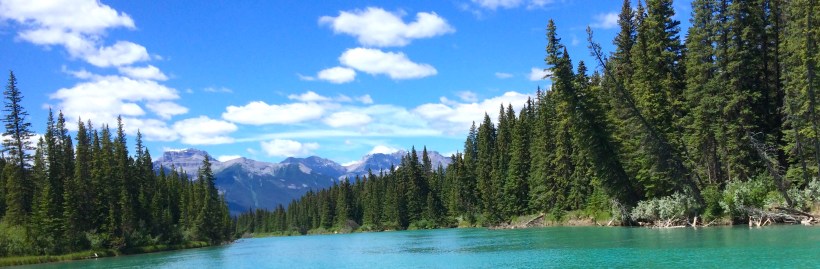
I’m in Banff right now and it is one of the most beautiful places I have ever been. We are surrounded by mountains and crystal clear water, bluer than the sky. Every time the sweet mountain air blows through my hair I smile, but there is part of me that hurts because I wish it could ruffle your hair, too. I wish you could feel this sun on your face, or the cool glacial water on your paws. I’m doing all of that for you, but it’s not the same. Even as I am surrounded by 360 degrees of magnificence I can’t picture anything more beautiful than the image of your perfect eyes. Nothing feels warmer to me than the thought of you, and there is nothing sweeter than the memory of your unconditional love.

I picked a flower for you and put it on a tower of rocks in the middle of a stream. The light caught it, and as we walked away it was still sitting in the sun. Maybe it blew away and was carried down the river, and that would be okay. All that matters is that we remember you, and we’re never going to forget you. We’re never going to stop loving you.

11174565_10206689479785024_6320801871780832366_o copy 2

I think this counts as an awakening.

Our 21st night in Texas, that’s what I want to write about. The state was huge, needless to say, and I had been anticipating it since the day I decided to do the Southern Tier. Sometimes the prospect of riding across the whole thing seemed more daunting than the rest of the country. The first half of it was in the desert, until we reached a peak in elevation just before Austin, and then leveled out into what would eventually become the lowlands of Louisiana. Most of it was the same story I have told over and over again… about the familiar toll of my 6 o’clock alarm, the gentle mornings, the harsh afternoons, and the yellow evenings that ended in a display of fiery brilliance that never failed to cast my shadow on the ground before me. I changed a lot of tires, screamed at a lot of large insects, applied a lot of aloe vera lotion to my burnt skin and ate a lot of Mexican food.

Riding my bike was starting to feel really familiar, and even comfortable, despite the fact that I was almost always fatigued. I couldn’t describe those iconic days accurately in a million words, but I’m going to try to express what it felt like when the hot Texas sun went down, and was replaced by stars that shined brighter than anywhere else. They had no city lights to compete with.

On the 21st night, the last night, we tried to wrap our minds around the scope of the state that we had overcome, but it was impossible. Our heads weren’t in Texas anymore; we had given up on our daily plight to be present a long time ago. We’d been day-dreaming for the better part of a month, wishing ourselves away from that place even in the easy spots, even in the cool mornings and mild, shady afternoons of the hill country.

We couldn’t help ourselves; it’s what we had to do to not be driven insane by the constant vibration of our thin tires against the chip-seal pavement. It’s what we had to do to keep from being hypnotized by the eternal buzzing of an earth that was never silent, or lulled to sleep by a night sky bigger than our eyes even allowed us to adequately ponder. The same sky that turned to darkness two hours earlier than we were prepared for. I suppose I was physically still in Texas in mid-October, but in many ways I felt like I had really been home all along. All I had to do was close my eyes, and there I was. And there we all were.

I guess I was always looking upwards then, if not for the unconscious boost of optimism brought on by literally holding my chin up, it was because I just couldn’t look away. I guess that’s what you do on a quest for enlightenment. You tilt your head back, and you breathe a deep breath, and you stop trying to hold on to the moment you’re in and you let yourself get lost in your own fantasies.

Because it was fall, I was usually thinking about my auburn-haired mother. This was our favorite season, and I could picture her in the red and orange canyons of the Black Hills where the leaves were the most brilliant, the same leaves that would be long dead before I returned to them. She’d be taking their pictures while they posed, taking advantage of the soft Autumn weather that we were both so addicted to. I wanted to be there, I wanted to be in that moment almost more than the one I was in. I had the whole world to look at, every last star in the entire galaxy was twinkling above me and I would have traded it all for one breath of those tart fermented leaves.

What’s funny is how I tried to escape it all. As if I wouldn’t dream of it day in and day out; as if I wouldn’t miss the same people that I blamed for stunting my wanderlust. But they still had ahold of me; the whole city still had me in its grasp. I knew that someday I would think of that moment in the first year of my adult life, on my first great adventure, when I had conquered the magnificent state of Texas and yet somehow still felt conquered by the less-magnificent state of South Dakota. Maybe when I looked back on it I would think I was wise for my age, or maybe I would think I was clueless. At this point I’m leaning toward the latter, though it was easy to find any philosophy profound when it was envisioned in the wee hours of the night.

What matters is that I was wide awake when the sun came out again in the morning, and I saw a dawn that burnt away every lesser source of light in the sky and every last drop of dew on the ground. It was easier to concentrate during the day; the light brought an added sense of clarity, and the feeling of desperation I had to make sense of the universe disappeared with the rising sun. The few bouts of understanding that I experienced on my trip were intense, but short lived. They came to me swiftly in a moment of contemplative awareness and faded away as soon as I was able to find my blissful ignorance. The answer to the unknown was actually quite simple for me; though it was beyond breathtaking, I didn’t belong in Texas. The word ‘enlightenment’ was starting to seem less and less significant to me, and I was beginning to get a whole new appreciation for the word ‘home.’ I was starting to like the idea of it more, too.

Being hungry in New Mexico.

This was the part of my trip that I thought I would be in the best shape my life. I was not yet to the point in my journey that I was eating at Waffle House multiple times a day but I was still packing away a fair amount of calories in New Mexico, consisting mostly of peanut butter, tortillas, plantain chips, and anything else I could buy at Walmart. I was eating almost constantly and even when I wasn’t I was still thinking about food. I didn’t even care what kind of food- anything and everything was good enough for me.

I guess I always assumed that riding my bike 3,000 miles would be enough to cancel out all of the carbo-loading and binge eating but alas, I was sadly mistaken. Any attempt at dieting that I made on my journey was short lived; I didn’t have the energy to practice much self control. At the time this was a real disappointment for me; riding my bike across the country had seemed like such a crazy thing to me before I left, and I guess I always thought that embarking on it would not only leave me enlightened but also slimmer and more attractive. Yet by the time I reached Texas I still looked the same, I felt the same, and as we inched our way eastward I began to realize that I was going to return to my home essentially as I had left it; restless and ambitious, but ultimately average.

Now, as I look back on the whole thing, that is one of my favorite aspects of the experience; the fact that I did it all while still remaining as mediocre as ever, especially as far as cycling was concerned. I loved discovering that going off on these types of adventures was not reserved for the elite, I think knowing that has left me more enlightened than the act of cycling itself. I was in the gray area of being both an athlete and a couch potato and that felt weirdly freeing to me, despite the fact that it wasn’t what I had envisioned for myself.

At least I was not alone in my desperation. The four days that we were in New Mexico were disturbing not only in the way that they left me ravenously hungry (which was understandable; they were all almost 70 miles) but also because we were plagued by the presence of bird-sized locusts that had, by the grace of god, been given the ability to fly. When they weren’t hovering in the air too close for comfort they were crouched over their dead siblings on the pavement, feasting on their brothers without an ounce of guilt for the moral crime that they were committing. Cannibalism was a way of life for them, and in that state, I didn’t feel inclined to judge them for it. The only difference between us was that I was a vegetarian.

The constancy of my food cravings was similar to the constancy of my thoughts of home, my loneliness, and the tiredness of my body. This kind of rhythmic thinking was hypnotic. As to be expected, days were beginning to bleed into each other. When paired with the hours spent shuffling all of the songs on my iPhone, time began to pass in a blur and before I knew it I was through one state and into the next. The circular motion of the day was broken up by the same, predictable incident; I would be pedaling along on a gust of breeze from the west when suddenly my position in the atmosphere would drop two inches lower, and my rear tire would begin making an awful hissing sound. This happened every day, even up to two or three times. The warped rim of my bike was making holes in my inner tube, and the broken spokes that were held together with zip ties were causing enough friction on my tire that it was wearing thin. Just like my patience, and what little spunk I had left from the first week of my trip. I was starting to get worn out and I knew that it was too early for that to happen.

So I let myself be hungry, in every sense of the word. I let myself daydream about green chile Rellenos in family owned restaurants and nachos with queso blanco. But I also dreamed about the idea of a new, shiny bike, and craved the thought of being able to go one whole day without having to change my tire. I fantasized about Texas, and Louisiana, and the ocean. I thought about what I would do when I got home, and what kind of adventures I could plan next. New Mexico taught me one of the most valuable lessons I have learned, and I have stayed true to it ever since; being hungry can be a good thing.

The art of crying in the desert.

The sunrise the next morning was beautiful. There was enough shallow cloud cover that the sky was cool and pink; a color that would turn to a muted yellow as the day went on. In the desert the sun didn’t have to be beating down on you for the air to be hot and dry; I learned this lesson early, only to have it confirmed on a daily basis when I was going through the Texas hill country. In eastern Arizona, however, this was a new kind of atmosphere.

In my mind rural America has always been that color; the color of the watered down iced tea that the dried out people drank on their yellow doorsteps. The watchers; the ones with the cats with yellow eyes that had a way of following you long after you were out of sight. The people with the yellow fences, and the yellow trucks, and in some cases, the yellow teeth. Their grass, their water, the windows of their houses- they were all yellow. Maybe it was the hazy sky that had this affect on them, or maybe it was the heat. Either way, Tuesday, September 22nd was coated in a fog of deep-southern heaviness that stuck with me for many reasons. It was a momentous day.

I saw my first dead dog that day, an image that has stayed with me as vividly as the day it happened. She was a gray pit bull, and when I came upon her she looked like she was sleeping, or had been alive only moments ago. Maybe the car that hit her had been one that had passed me earlier, and seeing her so carelessly laid to rest made me wonder why it hadn’t been me. Was it just chance, or was it because I was easier to see? Either way, the feelings she evoked were not really anger or frustration, or even fear; it was just regular old heartbreak. She didn’t even have a collar. Not only did I have the overwhelming urge to cry but I felt an overwhelming obligation to it too; this animal deserved to be mourned, and regardless of if anybody else was going to do it, I was.

Crying in the desert was an experience unlike any other, and at this point in my trip I was not yet accustomed to it. It was almost paranormal, the way it snuck up on you and held you down for as long as it wanted, and then disappeared quietly as if it had never happened. There was something about letting myself cry that felt so dangerous, maybe because I felt unusually close to falling apart all the time. I was almost always able to avoid it by being optimistic, which is why it was so rare, but today was one of those exceptions.

It was easy to get caught off guard by certain moments, even the seemingly ordinary ones, because when they mixed with the loneliness of the desert they had a way of becoming extraordinary and momentous. The act of passing by a dog like the ones I was missing so much at home, and realizing that it wasn’t even really a dog anymore but just a body, was a significant moment for me in that way. Sometimes, however, moments became momentous for more obvious reasons; simply because they were traumatic. I experienced another one of those moments several miles up the road.

As I crested the top of a hill I saw a couple of cars pulled off to the side of the road, and beside them, one of my friends, who was laying unconscious on the pavement. She had presumably hit the rumble strip and had detached herself from her bike, which was laying damaged in the dirt. She, too, had been damaged by the accident, and didn’t come to for a solid five minutes. I called the police as one of the other cyclists helped her the best he could, because he was an EMT. She woke up before the ambulance even got there, and she had no idea what had happened. Nobody had seen it. All I knew was that I had been going about 30 miles an hour as I came down the hill, and she could have been going even faster when she crashed.

The way she thanked us all so profusely when she was awake, and the way she climbed onto the stretcher all by herself was an incredible display of strength. She was taken in an ambulance and then airlifted all the way back to Phoenix, where they determined that she had severe traumatic brain injury, five broken ribs, a punctured lung, and numerous other injuries. She didn’t return for the rest of the trip, and wasn’t able to ride her bike again until months later. It was undoubtedly the most unexpected event of the entire trip.

She was such a fast rider, and she had so much more experience than me. Her abrupt absence was so unusual and unexplainable that the Southern Tier bike route itself began to take on a much more hostile demeanor. Nobody knew what to expect, and the rest of the trip was simply different from that point on. We were without one of our strongest riders for one thing, and without the same relaxed view of our safety that we had had before.The day that began with a soft pink glow ended in a cloud of yellow dust, as we finished the rest of an 80 mile day that felt too long not only in distance but in magnitude. After the accident it became evident that I was more than capable of doing the same thing, especially since I was so inexperienced. I was not indestructible; in fact, from that point on I began to feel vulnerable.